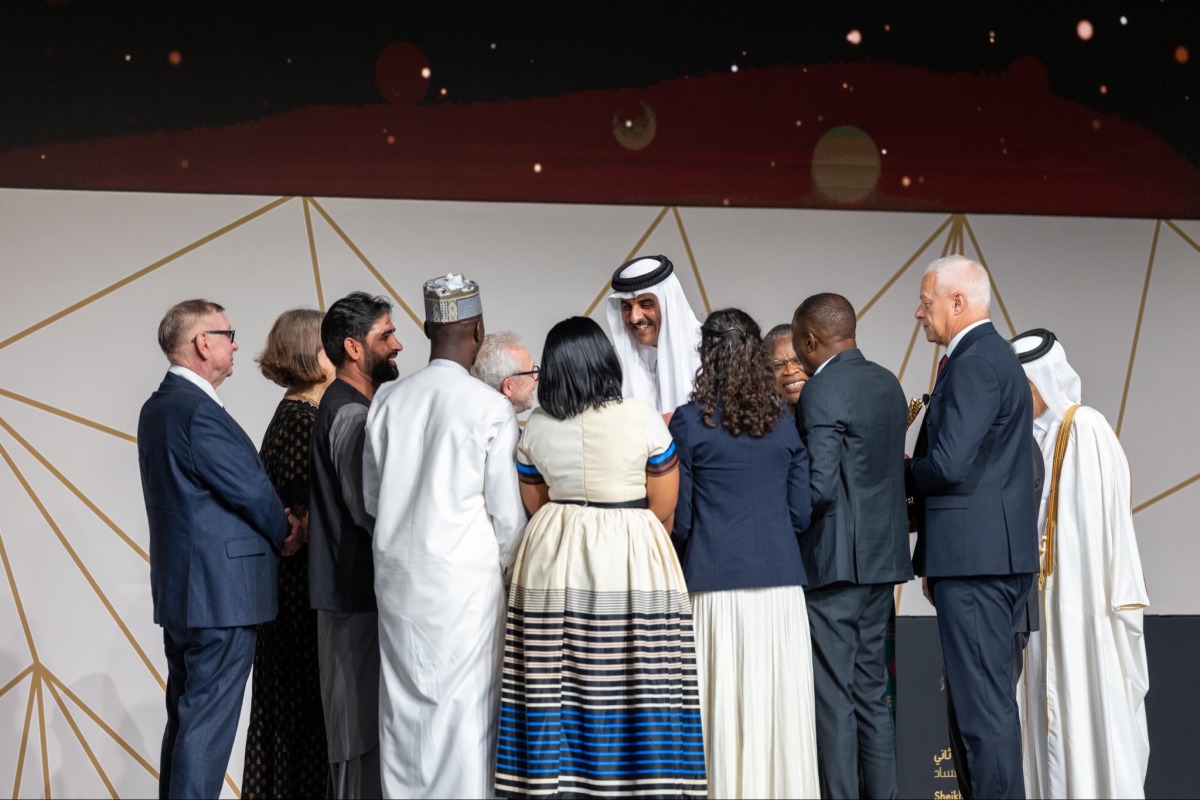
Doha, Qatar: Amir H H Sheikh Tamim bin Hamad Al-Thani yesterday honoured the winners of the ninth edition of the Sheikh Tamim bin Hamad Al-Thani International Anti-Corruption Excellence (ACE) Award during a grand ceremony in Doha, reaffirming Qatar’s steadfast commitment to promoting integrity, transparency, and accountable governance worldwide.
The prestigious Award advocates the importance of confronting corruption in all its forms and encourages the effective implementation of the measures enshrined in the United Nations Convention Against Corruption (UNCAC).
Over the years, the ACE Award has evolved into a global platform that celebrates courageous individuals and institutions that are at the forefront of the fight against corruption.
During the ceremony, H H the Amir honoured Professor Nikos Passas and Dr. Marianne Camerer, winners of the Academic Research and Educational Materials Award, as well as Gloria Pallares-Venials, Tatenda Chitagu, and Andiswa Matekenka, winners of the Innovation and Investigative Journalism Award.
In addition, H H the Amir also honoured Mar Niang and Motiullah Wesa, winners of the Youth Creativity and Engagement Award, along with Drago Kos and Dr. Obiageli Ezekwesili, winners of the Lifetime Achievement and Outstanding Achievement Award.
The ceremony was attended by Prime Minister and Minister of Foreign Affairs H E Sheikh Mohammed bin Abdulrahman bin Jassim Al Thani; Speaker of the Shura Council H E Hassan bin Abdullah Al Ghanim; President of FIFA H E Gianni Infantino; along with a number of Their Excellencies the Ministers, senior officials, diplomats, and distinguished guests.
Addressing the ceremony, Acting Executive Director of the United Nations Office on Drugs and Crime (UNODC), H E John Brandolino, expressed his deep appreciation to H H the Amir and the Government of Qatar for their steadfast support of global anti-corruption efforts.
“Today we honour extraordinary individuals who stand against corruption with courage, creativity, and conviction,” Brandolino said, noting that since the establishment of the ACE Awards, UNODC has been a proud partner of the Rule of Law and Anti-Corruption Center (ROLACC), describing the partnership as one rooted in the principles of UNCAC and a shared commitment to fairness, justice, and accountable governance.
Brandolino stressed that the Award stands as both a tribute to this shared commitment and a symbol of support for UNODC’s anti-corruption mandate. He emphasised that corruption disproportionately affects ordinary people, eroding trust and undermining development, while it is often ordinary citizens who take extraordinary steps to fight back.
“They are everyday people who refuse to accept that corruption is inevitable, who speak out against wrongdoing, and who stand up for integrity,” he said, adding that the ACE Award recognises the dedication of such individuals to building a world free from corruption.
Highlighting the diversity of the Award’s laureates, Brandolino noted that nominees and winners come from varied regions and walks of life, including academics, investigative journalists, whistleblowers, young students, and civil society activists. While their approaches and contexts differ, he said, they all share a common conviction that every person has the right and responsibility to say no to corruption.
He added that the experiences and insights of the winners help shape solutions in other regions and inspire collective efforts to promote integrity, accountability, and transparency. “The ACE Award is about celebrating achievements and sending a message that every effort counts, and that the courage to confront corruption can transform societies,” he said.
Brandolino also highlighted a new UNODC initiative, the ACE Award Winners Dialogue Series, which connects previous winners with young people to foster collaboration, share experiences, and design mentorship programmes.
The initiative will introduced at the upcoming Conference of the States Parties and aims to help shape the next generation of champions of integrity.
Acting Under-Secretary-General of the United Nations Office of Counter-Terrorism (UNOCT), H E Alexandre Zouev, also addressed the ceremony, expressing sincere appreciation to the Qatar and ROLACC for organizing and hosting the global event. He commended H H the Amir for establishing the International Anti-Corruption Excellence Award, noting that since its launch it has highlighted inspirational examples of leadership and integrity across the world.
“This powerful ceremony not only honours outstanding contributions to the fight against corruption, but also reminds us of our shared responsibility to work together towards a more just and accountable society,” Zouev said, expressing profound gratitude to Qatar for its significant contributions to global anti-corruption efforts.
Zouev warned that terrorism continues to pose a serious threat to international peace and security, often enabled by organized crime, illicit trafficking, and corruption. He underscored the importance of strengthening cooperation at the nexus of counterterrorism, rule of law, and anti-corruption, and expressed his readiness to work closely with the Government of Qatar, ROLACC, and UNODC in this regard.
He further highlighted that corruption remains deeply intertwined with organised crime and transnational illicit activities, eroding public trust, weakening institutions, and violating human rights, particularly affecting women and young people in conflict-affected settings. He noted that the United Nations Convention Against Corruption, adopted two decades ago, remains the only legally binding universal instrument dedicated to combating corruption.
Chairman of the Higher Committee for the Award, H E Dr. Ali bin Fetais Al Marri, said the ACE Award has succeeded in shedding light on the seriousness of corruption and the necessity of confronting it through sustained international cooperation and continued support for initiatives and professionals in the field.
He noted that the Award represents a practical model of Qatar’s commitment to partnership with the United Nations and to supporting Sustainable Development Goal 16, which focuses on building strong institutions, promoting justice, and combating corruption.
Dr. Al Marri traced the Award’s journey from its beginnings at the United Nations headquarters in Vienna, to its second edition in Geneva, before expanding to various continents worldwide. From the outset, he said, the objective was not merely to host a celebratory event, but to create a real and lasting impact in host countries. Reviewing key milestones, he highlighted the third edition in Kuala Lumpur, which marked a turning point through close coordination with the Malaysian government.
He also pointed to the Award’s experience in Africa, particularly in Rwanda, where it supported a decisive national approach to combating corruption, followed by regional conferences and ongoing institutional capacity-building in cooperation with the United Nations.
Similarly, in Uzbekistan, the Award was accompanied by close coordination with national authorities, broad anti-corruption campaigns, supportive legislation, and the development of a national roadmap and comprehensive strategy in partnership with the United Nations.