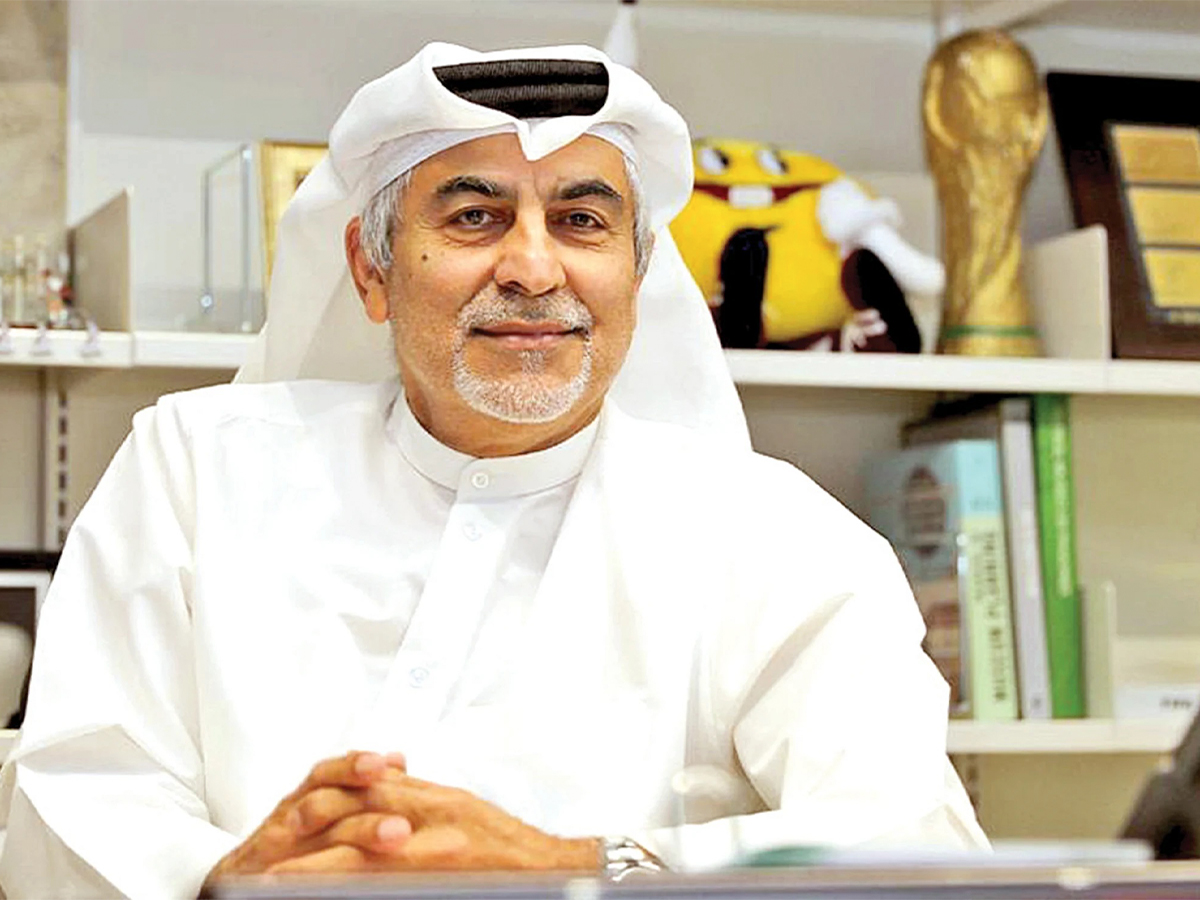
3-2-1 Qatar Olympic and Sports Museum director, Abdulla Al Mulla
Doha, Qatar: The 3-2-1 Qatar Olympic and Sports Museum is seeking to strengthen its role in promoting sports culture, preserving Qatar’s sporting heritage and inspiring greater participation in physical activity, its director, Abdulla Al Mulla, has said.
Speaking to The Peninsula, Al Mulla said the museum, located at Khalifa International Stadium, goes beyond displaying trophies and memorabilia to explore the human stories, values and experiences that shape sport, while encouraging visitors, particularly young people, to embrace active lifestyles.
“We are proud of our collection, but a trophy is only the final chapter of a much longer story,” he said. “Behind it are years of training, families, coaches and communities, and the values that sport teaches: excellence, friendship and respect. Our role at 3-2-1 is to tell that whole story.”
He added that the museum also seeks to present the human side of sport, including the experiences behind sporting achievements, with its ultimate mission being to inspire people to become physically active.
“If a child leaves wanting to run, jump or join a club, we have done something no trophy cabinet can,” Al Mulla said.
The museum’s own history reflects Qatar’s transformation into an international sports destination. According to Al Mulla, the idea for 3-2-1 emerged from the 2006 Asian Games, inspired by the vision of late Father Amir His Highness Sheikh Hamad bin Khalifa Al Thani.
Its Qatar gallery traces the country’s sporting journey, from traditional games and the introduction of international sports to the establishment of sporting institutions and the hosting of major global competitions.
For local visitors, the gallery offers an opportunity to recognise national sporting heroes and clubs alongside internationally celebrated athletes. For international audiences, it illustrates the decades of investment in athletes, grassroots participation and event hosting that have shaped Qatar’s sporting identity.
Al Mulla said the museum balances historical depth with interactive experiences to engage visitors with different interests and levels of knowledge.
While researchers and sports enthusiasts can explore an extensive international collection covering the evolution of sport, families and young people can participate in activities designed to test their reactions, balance and skills.
Among the collection’s notable objects is the ball used by Brazilian football legend Pelé to score his 1,000th goal. The museum also promotes academic research and runs educational initiatives, including summer sports camps, workshops exploring artificial intelligence and the future of play, and physical literacy workshops for physical education teachers.
Its partnership with Accessible Qatar further supports efforts to make sporting experiences more inclusive.
“We see ourselves as a centre for sports history and knowledge,” Al Mulla said, adding that the museum’s approach is to combine rigorous content with engaging visitor experiences.
Preserving the legacy of the FIFA World Cup Qatar 2022 remains another important part of its work. As the first World Cup held in the Middle East and the Arab world, the tournament represented a historic milestone for the region.
During the competition, the museum presented the ‘World of Football’ exhibition, tracing the tournament’s history from Uruguay 1930 to the final at Lusail Stadium.
The exhibition was developed with partners including the FIFA Museum, the Supreme Committee for Delivery & Legacy, the National Football Museum in the UK, the Musée National du Sport in France and the Qatar Football Association.
The museum subsequently took the tournament’s legacy to international audiences through its travelling exhibition, ‘Qatar 2022 Legacy: Journeys to Greatness’, presented in Mexico City from June 18 to August 9, 2026, as part of the Qatar, Canada and Mexico 2026 Year of Culture programme. Al Mulla said such initiatives demonstrate how sports museums can encourage cross-cultural dialogue by connecting people through shared sporting experiences.