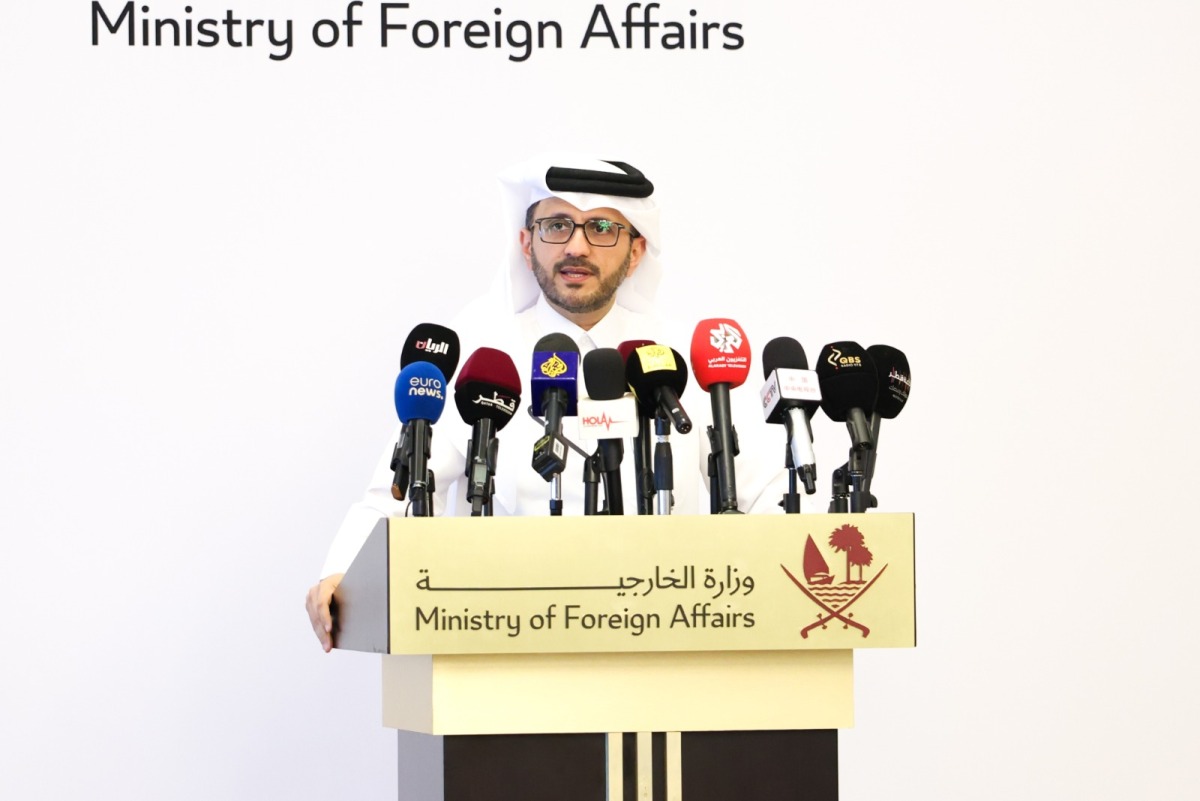
Doha: Advisor to the Prime Minister and Official Spokesperson for the Ministry of Foreign Affairs Dr. Majed bin Mohammed Al Ansari stressed that the solution to the current crisis should be primarily regional, noting that all Gulf littoral states and countries linked to its supply chains are directly concerned, alongside the necessary international dimension.
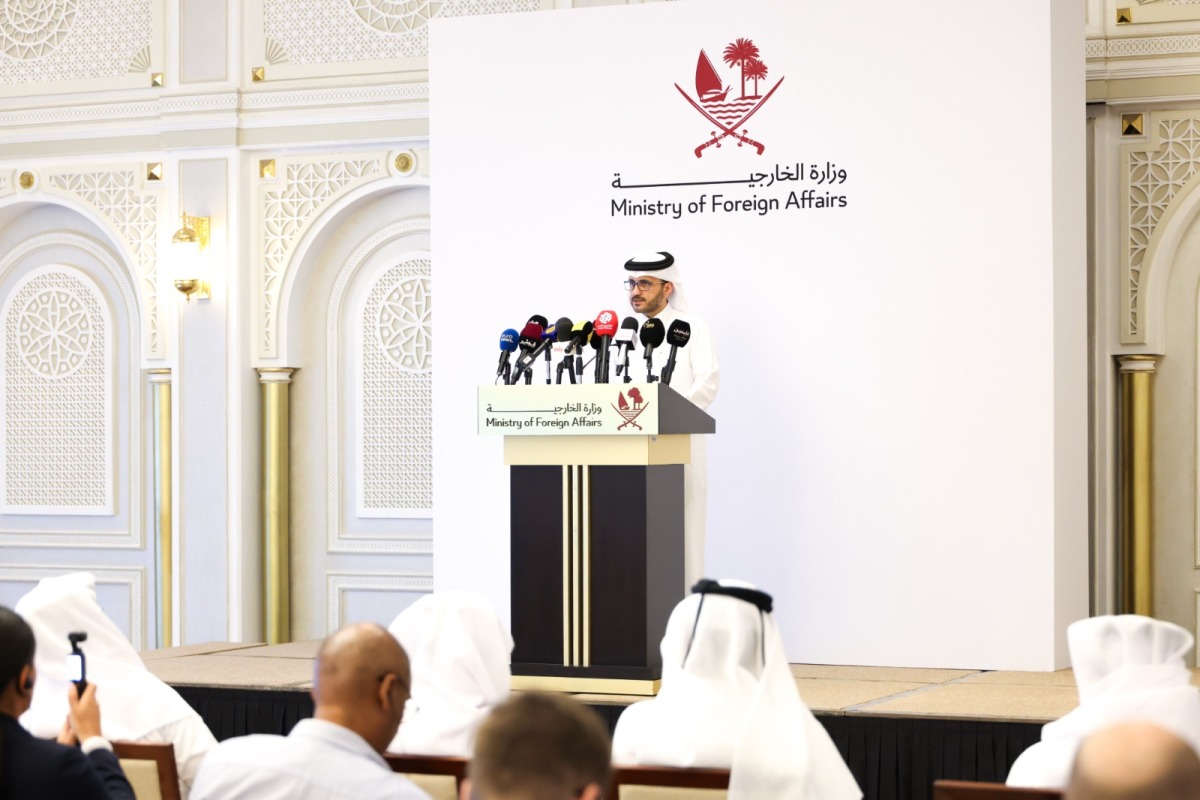
During the weekly media briefing held by the Ministry of Foreign Affairs, he said the current priority is to consolidate a ceasefire and transform it into lasting peace, adding that it is still too early to discuss final settlements amid ongoing efforts to end the war and prevent regional escalation.
Regarding developments in Lebanon, he reaffirmed Qatar's support for Lebanon's unity and its condemnation of all violations of its sovereignty, including ongoing Israeli operations and breaches, stressing that sustainable solutions can only be achieved through dialogue and diplomatic means.
He noted Qatar's support for regional, international, and Lebanese efforts aimed at de-escalation and ending ongoing hostilities, and highlighted continued communication with Lebanese and regional parties, emphasizing Lebanon's importance beyond its regional context.
On the economic impact of the war, he said the crisis has clearly affected global energy markets, including electricity and fuel prices, due to disruptions linked to maritime activity in the Strait of Hormuz, with effects extending to petrochemicals and other sectors.
He noted that some of these impacts may be strategic in nature, affirming the resilience of Qatar's economy and the wider region in facing challenges over the years, as demonstrated in past experiences.
He said that the Strait of Hormuz has not historically been an area of dispute, describing it as a natural waterway used for decades, and said the current situation is an exceptional condition resulting from escalation, requiring collective efforts to ensure maritime security and prevent its use as a pressure tool.
He reiterated Qatar's firm stance rejecting threats that violate principles of good neighborliness, stressing that the rhetoric of escalation and imposition serves no party.
He underscored that Qatar is committed to defending its sovereignty against any threats and continues to condemn all forms of aggression, taking all necessary measures to ensure its security and safety.
On the economic front, he confirmed that Qatar has taken all necessary precautionary measures and activated emergency plans, expressing confidence in the resilience of the Qatari economy and its ability to withstand crises.
He added that despite impacts on both the Qatari and global economies, the situation is being continuously assessed.
Advisor to the Prime Minister and Official Spokesperson for the Ministry of Foreign Affairs Dr. Majed bin Mohammed Al Ansari underlined the need to reopen the Strait of Hormuz to navigation without conditions, reiterating that the strait is an international passage that cannot be subject to the control of any single party, and that resuming traffic through it is a priority for both regional and global economies.
Regarding the mediation led by the Islamic Republic of Pakistan, the Advisor to the Prime Minister and Official Spokesperson for the Ministry of Foreign Affairs explained that there are intensive contacts with Pakistan, affirming Qatar's full support for the role being played by Islamabad in this regard.
He noted that Qatar continues to coordinate with mediators, encourages any statements or positions that facilitate negotiations, and seeks to ensure that the region's interests are represented at the negotiating table.
He said Qatar's goal is not limited to a ceasefire followed by other crises, but rather to reach a comprehensive solution that addresses the concerns of all parties in the region, including Iran, particularly with regard to security and sovereignty.
Al Ansari highlighted the high level of coordination among all Gulf states, with continued contacts at the highest levels to discuss shared challenges and convey them to mediators.
He explained that the call held on Monday between HE Prime Minister and Minister of Foreign Affairs Sheikh Mohammed bin Abdulrahman bin Jassim Al-Thani, and HE Iranian Foreign Minister Abbas Araghchi reaffirmed Qatar's objection and condemnation of Iranian attacks on Qatar and Gulf states, as well as its support for ongoing negotiations.
Al Ansari reiterated Qatar's rejection of all attempts to undermine its reputation regarding its handling of threats, adding that any attack on any neighboring country is rejected and requires a fundamental solution.
He stated that Iran has crossed red lines since the beginning of the war up to the last night before the ceasefire.
The Advisor to the Prime Minister and Official Spokesperson for the Ministry of Foreign Affairs clarified that the current situation is a ceasefire, not the end of the war, but rather a stage within a negotiating process, and Qatar is in a state of anticipation and following up with all parties regarding the ceasefire situation.
He added that the current stage does not require more mediators, but rather support for existing efforts within the framework of the mediation led by Pakistan, while adhering to the defined roadmap of these negotiations.
He explained that the mediators have a specific course for these negotiations, and they also have clear phased objectives in their handling of these negotiations, and once we cross the threshold of reaching an agreement, there will be a clear regional role.
Al Ansari stressed that the region cannot be ignored in reaching any agreement, noting that doing so had led to negative results in the past.
He said the region must not only be part of the solution, but a fundamental element in it, affirming that Qatar is coordinating with regional partners to formulate a unified regional position toward ending this war.
He clarified that Qatar is not currently playing a direct mediation role, but is closely coordinating with partners, especially Pakistan and the United States, to ensure that its issues and priorities are present at the negotiating table.
In a related context, the Advisor to the Prime Minister and Official Spokesperson for the Ministry of Foreign Affairs noted that no harassment or attacks on Qatari ships in the Strait of Hormuz have been recorded in recent days.
He expressed hope that the ceasefire will continue and that an agreement will be reached to end the crisis, stressing the importance of working toward sustainable solutions that preserve the rights and interests of all parties.
He reaffirmed continued coordination with various partners and support for all efforts aimed at reaching a comprehensive political solution to end this crisis.