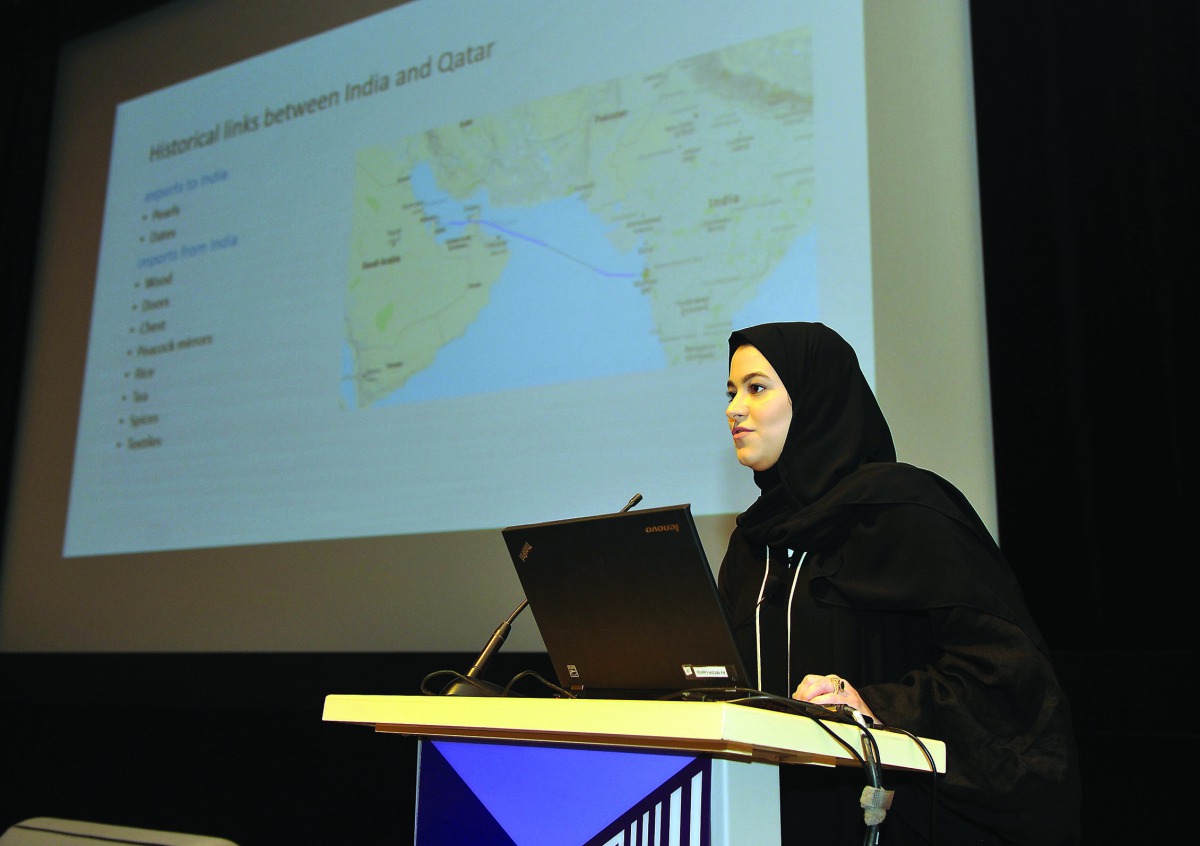
Tania Al Majid, Associate Curator of History and Ethnography at the National Museum of Qatar, speaking at the symposium at MIA Auditorium yesterday. Pic: Abdul Basit/The Peninsula
The close cultural links between Qatar in India mainly in textile heritage was one of the focal points of the symposium held yesterday at the Museum of Islamic Art (MIA) Auditorium in line with the Qatar-India 2019 Year of Culture.
The symposium was one of the features of a three-day event presented by Qatar Museums (QM) and Caravane Earth-an international movement for social, cultural and ecological transformation-which shines a spotlight on sustainable Indian fashion and textile industry.
Tania Al Majid, Associate Curator of History and Ethnography at the National Museum of Qatar (NMoQ) said trade links between Qatar and India date back centuries ago when India was Qatar’s main source of imports during the pre-oil era.
Textile was among the chief goods Qatar imported from India in addition to wood, doors, mirrors, rice, tea and spices while Qatar’s exports to India comprised pearls and dates, she said.
Al-Majid was speaking on “The Heritage of Qatari Traditional Wear, Links Between Qatar and India” in which she highlighted a number of objects from the NMoQ collection which confirm the extent of cultural ties between the two countries historically. Her talk focused particularly on textiles from India which were used in Qatari women’s clothing – their design, materials and how they were made.
Stressing the significance of traditional costumes as symbolic of a nation’s culture and identity, she said that while materials and techniques in making them have changed over time, Qatari costumes had generally maintained their style. She then delved into how fabrics used in making abayas had evolved from wool and linen to silk while showing photos of samples of everyday dresses and those worn during weddings and special occasions, some of which were intricately and lavishly designed. While the embroidery were inspired by Qatari environment, they also depicted Indian influence in their design.
Currently, Indian influence is still very evident in Qatari clothes, cuisine and spices, among other things, she added.
The symposium was moderated by Bandana Tewari, sustainability activist and former Vogue India Editor-at-Large who underlined the need for sustainable fashion as the industry is considered the world’s second largest polluter, only second to oil.
Other speakers were Pavitra Muddaya, Head of Vimor Foundation who talked about “The Heritage of Handloom: Tradition and Craft” and Dr. Jelena Trkulja, Director of Education at Qatar Museums who delivered a talk on “Sustainability, Creativity and Traditional Crafts: Preparing the Next Generation for the Future and Creating Opportunities.”
The three-day exhibition, which features Indian fashion and textile brands and artisans, remains open to the public today. In addition, a film screening in partnership with Doha Film Institute is scheduled at 3:30pm at MIA Auditorium today.