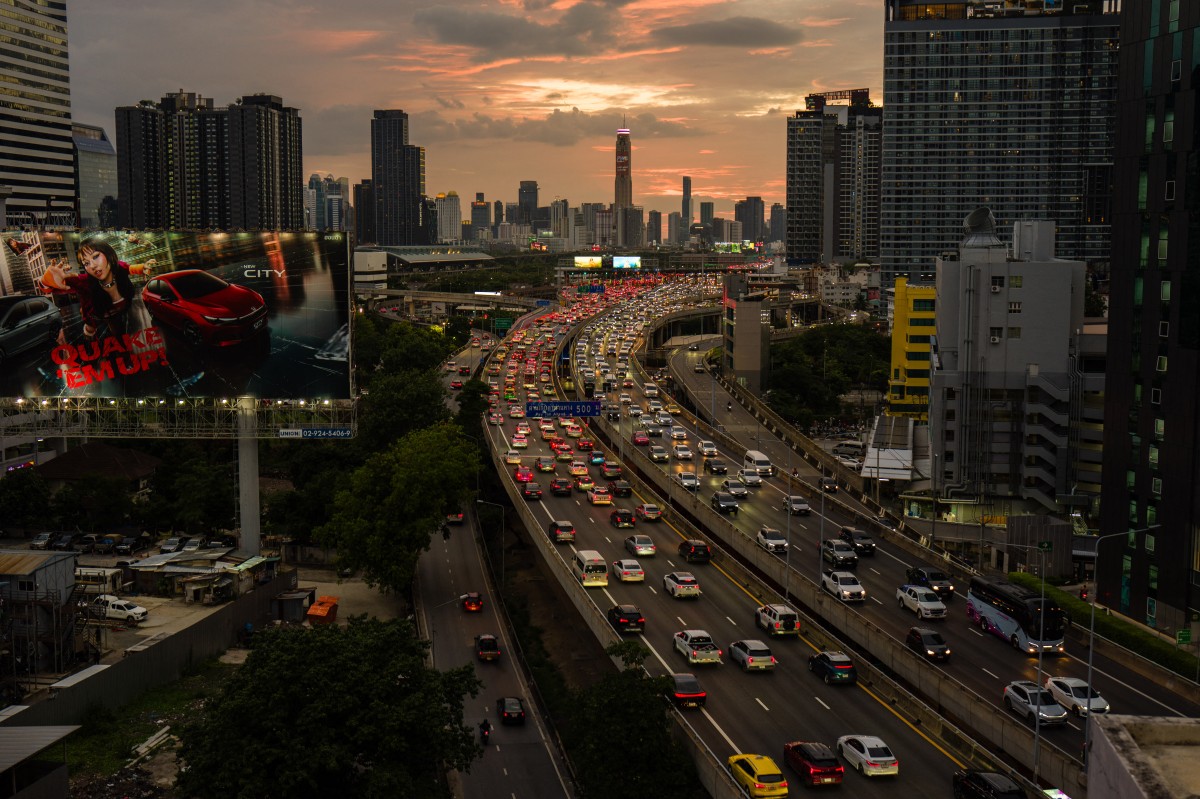
Commuters drive past commercial and residential buildings during the early evening rush hour traffic in Bangkok on September 4, 2026. (Photo by Anthony WALLACE / AFP)
Bangkok: Thailand’s industrial confidence fell in August as surging production expenses, sluggish consumer demand, as well as widespread flooding and rainfall dampened manufacturing output across the country.
The Thai industrial sentiment index dipped to 89.7 last month from 90.0 in July, as key components of the index deteriorated, led by higher operating costs and weaker orders, sales and output, according to the Federation of Thai Industries (FTI).
The decline was attributed to intense rainfall and flooding affecting production, logistics, and agricultural raw materials, while elevated energy and petrochemical feedstock prices continued to pressure manufacturing sectors, said Pimjai Leeissaranukul, chairperson of the FTI.
Pimjai said industrial operators also faced constraints from limited access to credit, weakening domestic purchasing power, notably in the automotive market, alongside intense competition from low-priced imported goods, particularly among small businesses.
Despite the softer reading, exports of technology and electronics products continued to expand on strong global demand for artificial intelligence applications. The food industry also expanded further in line with global demand, especially for processed foods and pet food, she told a news conference.
Based on a survey of 1,330 entrepreneurs across 48 industry groups conducted by the FTI, concerns heightened in several areas, especially the global economy, energy prices, and the domestic economy. Meanwhile, worries about government policy and access to credit declined.
The index forecast for the next three months stood at 97.0 in the August survey, up from 96.1 a month earlier, supported by government measures aimed at boosting investment and higher seasonal spending during the year-end festivities.
Additionally, economic stimulus programs in the final quarter of 2026, together with initiatives promoting the energy transition, are expected to be key drivers of increased fund circulation and support for broader economic activity.
However, the Middle East conflict continues to threaten production sites, raw material supply chains, and energy price stability. At the same time, Super El Nino-related weather volatility could disrupt agricultural output, raw material supplies, and industrial operations.
The group urged the government to promote local content in foreign direct investment projects by tying incentives to Thai business development, helping local suppliers upgrade and integrate into foreign supply chains.