The Standing Committee on Peace and International Security of the Inter-Parliamentary Union (IPU) yesterday approved resolution on non-admissibility of using mercenaries and foreign fighters as a means of undermining peace, and international security, the territorial integrity of states and violating human rights.
The draft of this resolution was discussed by the Inter-Parliamentary Union’s (IPU) Committee on Peace and International Security and yesterday the resolution passed by 23 votes in favour and 11 opposing the draft resolution. The committee is to forward the resolution the general assembly of the IPU for final adoption.
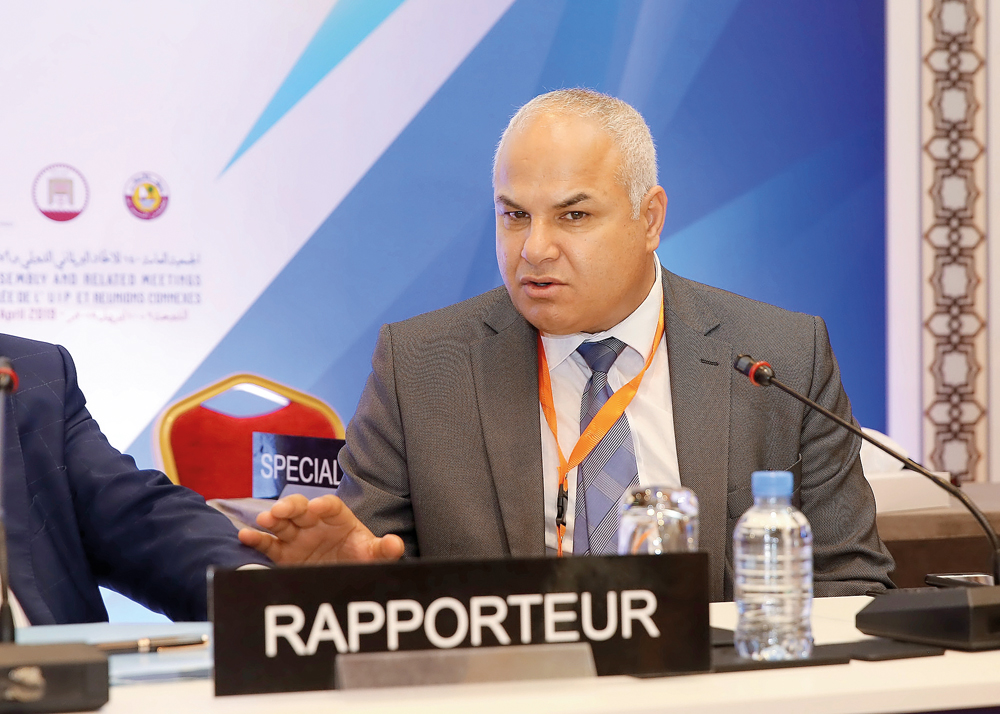
“The resolution calls on the IPU’s General Assembly to cooperate with the UN General Assembly for setting up joint legal standards. The resolution is based on the definitions given by the UN to the concepts of mercenaries and foreign fighters,” Khalid Bakkar (pictured), Rapporteur of the Committee told The Peninsula on the sidelines of the event.
“The resolution rejects and criminalises the use of mercenaries and foreign fighters for undermining peace and abuse human rights,” Bakkar said, noting that national parliaments in their respective countries need to pressure their governments to implement this resolution.
He added: “Some European and Scandinavian countries proposed amendment in the draft resolution and they voted against because they believe that the mixture of mercenaries and foreign fighters create confusion and differences therefore the concepts should be cleared between the two, Rapporteur of the committee said, adding that but finally the resolution passed with big majority.”
“Amending the resolution again will mean making it more comprehensive and coherent, Bakakr stressed, noting, “We need to be together to maintain peace and security, and thanks to the State of Qatar for hosting these meetings.
We preferred to adopt a general resolution without mentioning certain cases, because we are international institution to fight against mercenaries and illegal activities undermining security and stability of any country,” said Bakkar while answering question on why there was no mention of certain cases like the situation in Yemen and Syria or ISIS.”
“We are speaking about global phenomenon and global peace and security and these activities should be eradicated to make the world free and secure,” he added.
Earlier, after the voting on the resolution, a representative of Czech Republic said: “We objected this resolution because it does not match with the IPU agenda although the resolution.”
The resolution urged all national parliaments to take legislative measures to ensure that their nationals do not participate in the recruitment, assembly, financing, training, protection or transfer of mercenaries or foreign fighters, and requested parliaments to amend their existing laws to prevent and punish the recruitment of mercenaries or foreign fighters.
The governments are required according to the this resolution to prevent use foreign fighters and mercenaries by private military and security institutions that participate in activities designed to enhance security in any country or violate human rights and international humanitarian law.
It also called on parliaments to impose a ban on the recruitment, training, financing of foreign fighters, including those working for military and security institutions that intervene in armed conflicts in order to destabilize constitutional systems.
The Rapporteur of the Committee Khalid Bakkar of the Hashemite Kingdom of Jordan and B. Tarasyuk of Ukraine stressed during the discussion that some of the biggest threats were terrorism and conflicts as they undermine peace, security, sovereignty and territorial integrity of states.
From 2011 to 2014, the number of deaths from armed conflict rose by 356 percent, while the number of deaths from terrorism rose by 353 percent. They highlighted that children and young people have become the main recruiting target for terrorists.
They noted that the United Nations and its member states are fighting terrorism and armed conflicts by addressing mercenaries’ issues, such as private military contractors and foreign terrorist fighters.