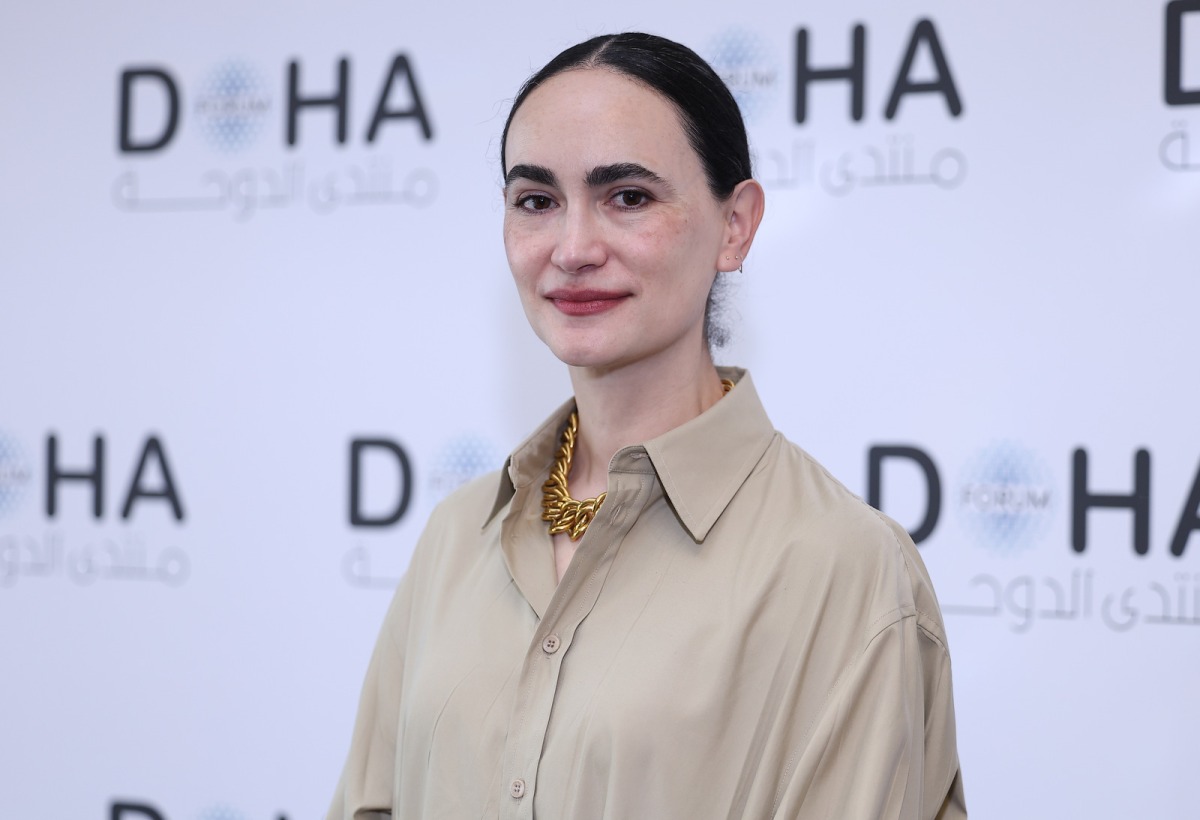
Mexican architect Frida Escobedo
Doha, Qatar: Qatar’s future Ministry of Foreign Affairs (MoFA) headquarters is designed to be more than a government building; it will be a symbol of diplomacy, a cultural landmark, and a respectful dialogue with the nation’s architectural past.
At the helm of this ambitious project is internationally acclaimed Mexican architect Frida Escobedo, whose practice is known for its “deep engagement with time, social context, and material expression.”
Escobedo’s studio was selected after an international competition that initially drew 40 leading architectural teams, overseen by Malcolm Reading Consultants on behalf of MoFA and Qatar Museums. Chairperson of Qatar Museums H E Sheikha Al Mayassa bint Hamad bin Khalifa Al-Thani oversaw the competition in her capacity as Chairperson of Qatar Blueprint, a national initiative shaping development in collaboration with public and private partners.
The architecture proposal integrates both new construction and the adaptive reuse of the iconic 1985 General Post Office (GPO), a building beloved for its modernist “pigeonhole” façade and long-standing presence on Doha’s urban landscape.
In an exclusive interview with The Peninsula, Escobedo explained the core idea behind her proposal, which began with the concept of cultural duality.
“The starting point for us was to understand that culture has different forms of expression,” she said. “One is a material expression, and the other is an immaterial expression. That has to do with ideas of diplomacy and welcoming people. The other form relates more to the physical environment, architecture and how we could bring those two together.”
The 70,000-square-metre complex will rise beside Doha Bay, conceived as a place that functions on several levels: a headquarters of international diplomacy, an architectural landmark, and an accessible civic space connecting the public with Qatar’s cultural mission.
Escobedo describes the new MoFA building as “a stepped mass revolving around central courtyards.” Monumental in scale yet thoughtful in its human experience, the structure draws from both Qatari and wider Arabic architectural traditions, an area where the architect sees unexpected cultural parallels with Mexico.
“In Mexico, we have a long history related to Arabic architecture,” she said. “For me, that was a way of introducing ideas of sustainability and human scale.”
The courtyards, key to the design, will bring natural light deep into the building, give staff access to outdoor spaces, and create small zones where spontaneous conversations can happen.
“It’s conceived as a small city within a city,” she said. “People would always feel connected to the exterior, and people from Doha would also be easily related to the scale of the building.”
A significant part of the project is the adaptive reuse of the former General Post Office, a structure with public sentimental value and architectural character.

“The project is divided into two aspects,” Escobedo said. “First, the refurbishing of the GPO, which has a very deep history here and a building people love very much. The other part is the MoFA headquarters.”
The GPO, known for its distinctive modular facade, will be preserved and transformed into spaces that support cultural diplomacy. It will house a library, a cultural centre, a public garden, meeting rooms, prayer spaces, and a café.
“The reference between the GPO and MoFA was very important,” she added. “We are borrowing design elements from the GPO, repetition, modularity, and pre-modular systems that help create an envelope that works structurally, protects from the sun, and allows natural light to be always present.”
Because the building will represent Qatar on the global stage, Escobedo was intentional about how diplomacy is expressed through space.
“The hierarchy of the spaces defines the building’s shape,” she said. “Formal spaces are important, but so are the small in-between spaces, courtyards or corridors, where other types of conversations might happen.”
She sees these informal encounters as essential to diplomacy, just as much as grand halls and official meeting rooms. “Both of these worlds are equally important for us,” she emphasised.
The design also aims to strike a balance between heritage and innovation.
“We wanted the building to express pride in history. The precedents are relevant,” Escobedo said. “It doesn’t mean we’re not forward-looking—we’re adopting new technologies—but always in relationship to heritage.”
For Escobedo, the project has become more than a design challenge; it has been a cultural learning journey.
“It has been a wonderful window into Qatari culture,” she reflected. “I’ve seen that Qatari people are generous, open-minded, and great mediators. We want to express that in our building.”
The project timeline is still open, with no confirmed start date, but the vision is clear.
When asked to capture the entire project in just a few words, Escobedo paused before offering a description that encapsulates the heart of the design: “It’s a building that wants to create a link between the past and the future—one that relates to Qatari heritage and understands the new vision for the country.”