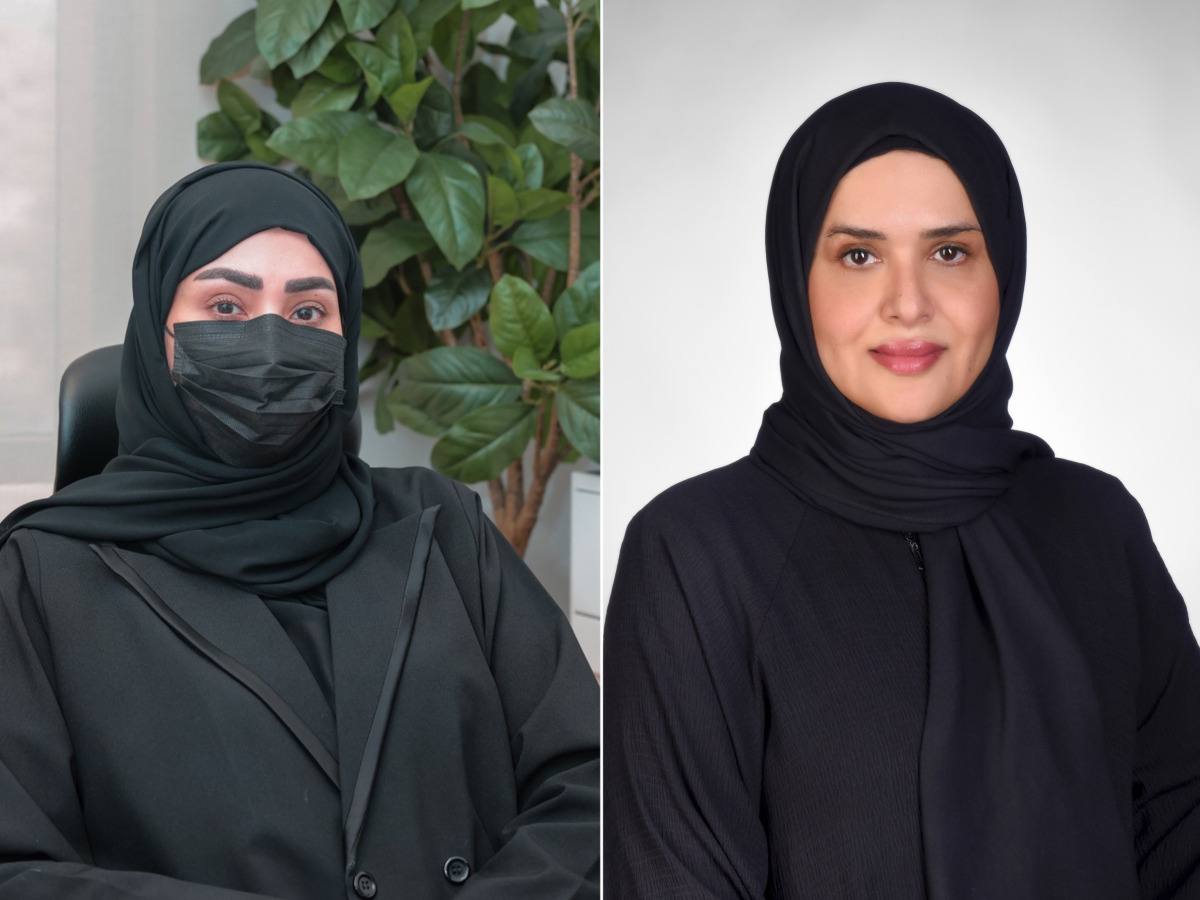
Director of Occupational Health and Safety Department, PHCC, Dr. Maryam Al Muslemani (left) and Manager of Occupational Health Dr. Sameera Al Hajri
Doha, Qatar: The Primary Health Care Corporation (PHCC) is observing Global Ergonomics Month throughout October, promoting safer work environments, preventing musculoskeletal disorders and reducing workplace risks.
This year’s campaign, themed “It’s Global Ergonomics Month 2026. A perfect time to put ergonomics principles into action,” focuses on “Manual Handling and Patient Transfers in Daily Work,” highlighting the importance of safer techniques and proper body mechanics, particularly in healthcare settings.
As part of the campaign, practical sessions are being held at three health centres, allowing employees to apply safe manual handling and patient transfer techniques. An e-learning module is also being developed on the Learning Management System, alongside an online Continuing Professional Development lecture, to extend ergonomics training to a wider number of PHCC employees.
Dr. Maryam Al Muslemani, Director of the Occupational Health and Safety Department at PHCC, said a safe and supportive workplace was a direct investment in employees and the quality of patient care.
“An employee who works in an environment designed to suit their body and the nature of their tasks is less likely to experience pain and fatigue, and is more focused and satisfied with their work. This directly impacts their productivity and patient safety,” she said.
She added that prevention was better than cure and that attention to workplace conditions was an integral part of the health and safety culture PHCC was seeking to establish across its facilities.
Dr. Sameera Al Hajri, Manager of Occupational Health at PHCC’s Occupational Health and Safety Department, said musculoskeletal disorders, including back, neck, shoulder and wrist pain, were among the most common work-related health problems.
Risk factors include prolonged sitting or standing, non-neutral postures, repetitive movements, incorrect lifting and carrying, and poorly arranged workspaces. She said simple adjustments could significantly improve working conditions and prevent injuries, including changing posture regularly, taking short movement breaks, stretching during the workday, maintaining neutral positions for the neck, back and limbs, and adjusting chairs, screens and keyboards to suit individual employees.
“Ergonomics is the science that studies the relationship between people, their work, and the tools and systems they use, with the aim of designing them to suit human physical and cognitive capabilities, rather than requiring people to adapt to them,” Dr. Al Hajri said.
She noted that ergonomics now extends beyond physical design to cognitive factors such as mental workload, clarity of information and task organisation, helping reduce errors and improve performance.
Dr. Al Muslemani said training and awareness were central to PHCC’s ergonomics programme, which was established in 2018 following a survey identifying workplace-related issues across its facilities. The programme assesses work environments, identifies and analyses risks, develops solutions and monitors their effectiveness through continuous improvement.
She said the programme also promotes awareness through PHCC’s intranet and internal communication channels, encouraging safe manual handling, movement and stretching, and proper workplace organisation.
Best practices in ergonomics have demonstrated reductions in work-related injury treatment costs and absenteeism, alongside improved job satisfaction.