By Fazeena Saleem
DOHA: With more drowning cases among young children in Qatar being reported and an annual increase in such incidents, Hamad Medical Corporation (HMC) has urged families to ensure children’s safety around swimming pools, the sea and other sources of water, as they venture out to swim during summer.
In Qatar, drowning is a leading cause of death and serious disability in children and the number of child deaths is rising annually, according to Dr. Khalid Abdulnoor Saifeldeen, Chairman, Kulluna Health and Safety Campaign, and Head, Hamad International Training Centre, HMC.
Ninety percent of cases of drowning involve children aged 10 or under, with 70 percent younger than four years old.
“Most drowning cases in Qatar occur at home, in private swimming pools and bathtubs. Though we don’t have open lakes and rivers, some incidents of drowning occur in the sea because families often go to the beach for picnics and leisure activities at this time of the year,” said Dr. Saifeldeen. “Almost all drowning incidents in swimming pools happen when parents are not present and either one child or a group of children are left to swim alone by themselves.”
Constant supervision is the key to keeping a child safe around water, stressed Dr. Saifeldeen.
“You will not be aware that a child is in trouble unless you are watching him or her. Don’t leave children on their own around or in the water, even if they can swim, even if they’re wearing life jackets.
“Supervision means you can see and hear them and can reach them very quickly, because drowning can take seconds to happen and it often happens in silence,” he added.
Unintentional access to sources of water can be prevented by installing a secure gate or other barriers, which must be checked regularly to ensure the barrier is working properly and serving its purpose as a child grows in height and dexterity, he suggested.
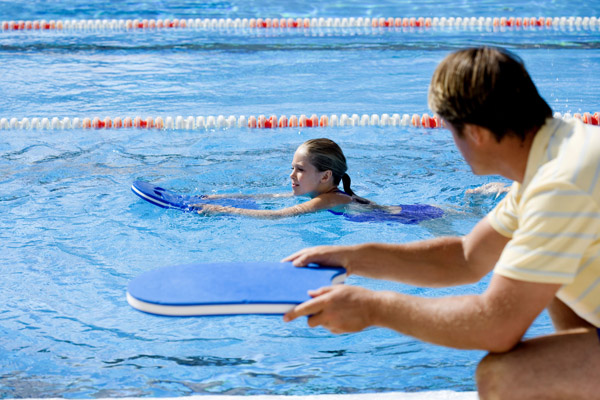
“Always close the doors to bathrooms and drain paddling pools, baths and buckets immediately after use. About 70 to 80 percent of drowning cases happen when the child is not supposed to be in the water,” Dr. Saifeldeen said, stressing that barriers alone are not enough and direct supervision is still essential. He said there are schools and clubs in Qatar where children can learn swimming and parents can teach their kids under direct supervision.
Small children and those inexperienced or weak swimmers should wear life jackets or a personal flotation aid when in or near water, even with parents around, he said, noting that these devices are not a substitute for adult supervision.
Dr. Saifeldeen pointed out that learning CPR could be very useful as the first few minutes following an accident in water are critical. “Keep your training up to date and keep CPR instructions with your first aid kit, and by the pool, if you have one. Kulluna offers free CPR training and anyone interested can send a message through our website www.kulluna.qa.”
Kulluna has provided education on CPR and children’s safety in engaging and interactive ways in more than 70 schools in Qatar. “We hope we don’t reach the point where we need CPR. Unfortunately, even if we manage to successfully resuscitate a child, children can end up with severe disability,” he said.
Several parents The Peninsula spoke to yesterday said they are keen on their children’s safety while swimming and take precautions.
All of them, however, admitted that they don’t know how to perform life-saving CPR technique in case of an emergency. “We never let children swim alone in the pool or in the beach but always accompany them and stay at a safe distance so that we can hold the child in case of an emergency,” said a mother of three children aged between five and 11.
“My elder son is going for swimming classes yet when we go out with family we don’t let him be alone in the pool or beach,” she added. “I always make sure that the children wear floating aids before they get into water when we take them to the pool or the beach,” said Sithhy Shafnaz, mother of two.
“The pool within the compound is closer to our home and children tend to go near the pool when they are out to play. So we never allow them go out alone,” she added. Both said they don’t know how to perform CPR.
The Peninsula