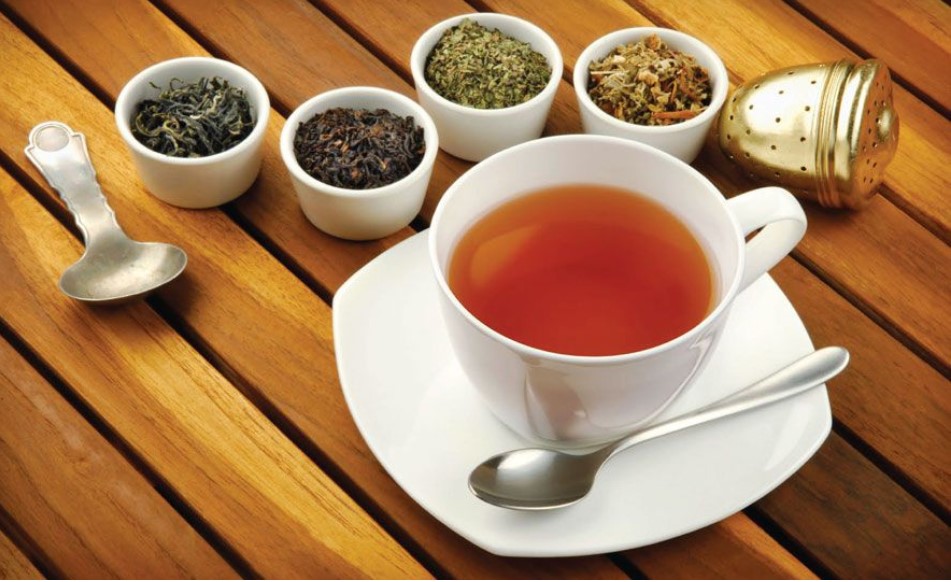
Doha, Qatar: Katara Cultural Village in partnership with the Sri Lankan embassy in Doha will today host Ceylon Tea Tasting Evening — a celebration of the International Tea Day and 159 years of unbroken excellence of the legendary Ceylon tea industry.
The evening will offer guests an immersive journey into the heritage, craftsmanship, and rich aromas that have made Ceylon Tea one of the world’s most celebrated beverages.
Origins and Historical Legacy
The story of Ceylon Tea is one of transformation — from a modest 19-acre plot of land to a globally celebrated industry that defines the identity of an entire nation. In 1867, James Taylor, a visionary Scottish planter, introduced commercial tea cultivation to the island then known as Ceylon (present-day Sri Lanka). What began as a small experimental plantation in the misty highlands gradually expanded into one of the most significant agricultural enterprises in Asia.
Over the course of more than 150 years, Sri Lanka has refined its craft, built its reputation, and established Ceylon Tea as a benchmark of excellence in the global tea trade. Today, the legacy of that first plantation lives on in every cup of tea bearing the iconic Lion Logo — a symbol that tells the world: this is Ceylon Tea, the finest tea in the world.
Global Standing and Economic Significance
Ceylon Tea's reach and influence on the world stage is remarkable. Sri Lanka holds the prestigious title of the world's largest producer and exporter of Orthodox Black Tea, a method of manufacture that preserves the natural shape and integrity of the leaf, producing teas of exceptional quality, aroma, and flavor. Beyond Orthodox tea, the country also ranks as the fourth largest tea producer and the fourth largest tea exporter in the world overall — achievements that reflect decades of agricultural expertise, investment, and dedication.
The economic importance of tea to Sri Lanka cannot be overstated. The industry supports an extensive network of livelihoods — from smallholder farmers tending highland gardens in the early morning mist, to estate workers carefully hand-plucking leaves, to factory workers processing, grading, and packing the final product, to blenders, exporters, and retailers around the world. Tea is not merely a commodity; it is the backbone of rural Sri Lankan communities and a vital pillar of the national economy.
Sri Lanka's tea export earnings have shown a consistent upward trajectory in recent years, rising from USD 1.26 billion in 2022 to an impressive USD 1.51 billion in 2025. Total tea production in 2025 reached approximately 264.6 million kilograms, with low-grown teas accounting for the largest share at 61%, followed by high-grown at 21% and medium-grown at 18%.
Top Export Destinations
Ceylon Tea travels across borders and oceans to reach tea lovers on every continent. The top importing countries in 2025 were Iraq (15.31%), Russia (8.39%), Turkey (8.27%), Libya (7.36%), and the UAE (7.12%). Iraq has consistently held the top position over the past three years, reflecting the deep cultural affinity for tea across the Middle East and Central Asia. Chile, China, Iran, Azerbaijan, and Saudi Arabia also feature prominently among Sri Lanka's key trading partners, illustrating the truly global appeal of Ceylon Tea.
Seven Regions, Seven Distinct Characters
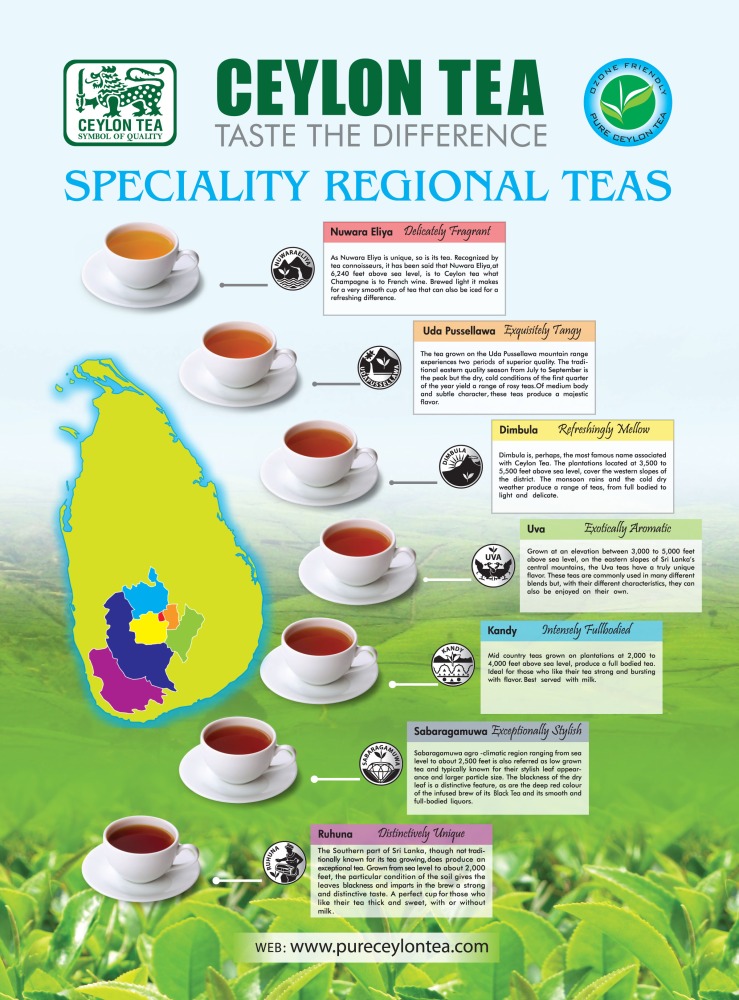
One of the most captivating aspects of Ceylon Tea is its extraordinary regional diversity. Sri Lanka is home to seven agro-climatic growing districts, each producing teas with their own
unmistakable personality, shaped by the unique combination of altitude, soil composition, rainfall patterns, and temperature of each region.
· Nuwara-Eliya — Grown at the highest elevations, these teas are delicately fragrant, light in color, and prized for their floral, almost ethereal quality.
· Uda Pussellawa — Teas from this region are exquisitely tangy, offering a lively brightness and a slightly rosy hue that makes them stand out.
· Dimbula — Dimbula teas are refreshingly mellow, with a smooth, well-rounded character that makes them ideal for everyday drinking.
· Uva — Perhaps the most celebrated of all Ceylon tea regions, Uva teas are exotically aromatic, with a distinctive menthol-like quality that has captivated connoisseurs for generations.
· Kandy — As the original heartland of Ceylon's tea industry, Kandy produces teas that are intensely full-bodied, rich, and robust — perfect for those who enjoy a strong, hearty brew.
· Sabaragamuwa — These stylish, leafy teas offer a smooth character with lower astringency and a naturally sweet finish.
· Ruhuna — Grown in the southernmost low-country regions, Ruhuna teas are distinctively unique — bold, dark, and powerfully flavored, with an earthy depth unlike any other.
This diversity of flavor, color, aroma, and character is unmatched by any other single tea-producing nation, making Sri Lanka a truly extraordinary origin.
The Art of Tea Making: From Soil to Spirit
The journey of Ceylon Tea from the garden to the cup involves an intricate sequence of steps, each demanding skill, patience, and careful judgment. The process begins with the nurturing
of the tea plant in rich, well-drained soil, often perched on steep hillsides blanketed in morning cloud. Skilled pickers — predominantly women with decades of experience — hand-pluck only the finest two leaves and a bud from each shoot, ensuring that only the most tender and flavorful growth is selected.
Once harvested, the leaves undergo a carefully controlled manufacturing process involving withering, rolling, oxidation (fermentation), and firing. Each of these stages is critical in shaping the final character of the tea. The timing, temperature, and technique applied at every step are guided by generations of inherited knowledge and sensory expertise — a craft passed down through families and factory teams over more than a century.
For artisanal teas, this process is taken to an even higher level of refinement. Produced in small, carefully controlled batches, artisanal Ceylon Tea is crafted with close attention at every stage — monitored not by machines alone, but by the sight, touch, and aroma of the tea artisan. The result is a product of exceptional depth, character, and individuality. Every batch tells its own story, shaped by the unique conditions of the land, the season, and the hands that crafted it. Consumers of artisanal tea are not merely purchasing a beverage; they are investing in a place, a tradition, and a human story — an emotional connection that elevates both the value and the appreciation of the tea.
Tea Grades: A Spectrum of Quality
Ceylon Tea is produced in a wide range of grades, reflecting the different styles, particle sizes, and processing methods applied during manufacturing. These include whole-leaf grades such as Orange Pekoe (OP) and Pekoe, which offer a delicate and nuanced cup; broken grades such as Broken Orange Pekoe (BOP) and Flowery Broken Orange Pekoe (FBOP), which deliver a stronger, more brisk brew; and smaller grades like Fannings and Dust, which are ideal for commercial tea bags and offer maximum strength and body. Specialty grades such as Silver Tips — the finest dried buds, prized for their velvety appearance and delicate medicinal properties — represent the pinnacle of artisanal production. Green tea varieties including Gun Powder and Sencha round out the extensive Ceylon Tea portfolio, reflecting the industry's adaptability and innovation.
Environmental Commitment: Ozone Friendly Tea
Ceylon Tea holds another remarkable distinction — it is the world's first Ozone Friendly tea. In 2007, the Sri Lanka tea industry received formal recognition from the Montreal Protocol for its complete elimination of Methyl Bromide, a harmful ozone-depleting substance formerly used in agriculture. This makes Ceylon Tea not only a pleasure for the palate but also a responsible choice for the planet. Ozone-friendly Ceylon Tea supports the reduction of global warming, promotes ecological purity, and reflects the industry's commitment to environmental stewardship — helping build a cleaner, greener world for future generations.
The Lion Logo: Your Guarantee of Authenticity
With Ceylon Tea's global reputation comes the ever-present risk of imitation. To protect consumers and uphold the integrity of the brand, the Sri Lanka Tea Board introduced the Lion Logo — a registered trademark recognized in approximately 100 countries worldwide. The Lion Logo is your assurance that the tea in your cup is 100% pure Ceylon Tea, packed in Sri Lanka, and meeting the strict quality standards established by the Tea Board. Only brands that comply with these conditions — using pure Ceylon Tea, packing within Sri Lanka, and passing quality benchmarks — are granted the right to display this iconic symbol. For consumers around the world, the message is simple: look for the Lion Logo.
In addition to the Lion Logo, GI regional Logos linked to each of the seven growing regions serve as certification marks that authenticate the geographic origin of the tea. Brands packed outside Sri Lanka containing 100% Ceylon Tea may also use these GI regional logos under a formal licensing arrangement, further extending the reach and recognition of Ceylon Tea's regional identity.
Tea as a Shared Human Story
Beyond economics, geography, and trade statistics, Ceylon Tea carries a profound human dimension. International Tea Day 2026, observed on 21 May, is celebrated under the theme "Sustaining Tea, Supporting Communities" — a message that resonates deeply with the realities of the industry. Tea sustains millions of livelihoods across producing regions, forming an essential part of daily life not only for those who grow and process it, but for the billions of people around the world who begin each day with a cup. It is a beverage that bridges cultures, fosters connection, and carries within it the stories of the land, the labor, and the love that went into its creation.
From the early morning mist rising over a Nuwara-Eliya garden, to the skilled hands of a factory artisan in Dimbula, to the warm cup shared between friends in Baghdad or Moscow or Santiago — Ceylon Tea is more than what's in the cup. It is a story of land, labor, and love.