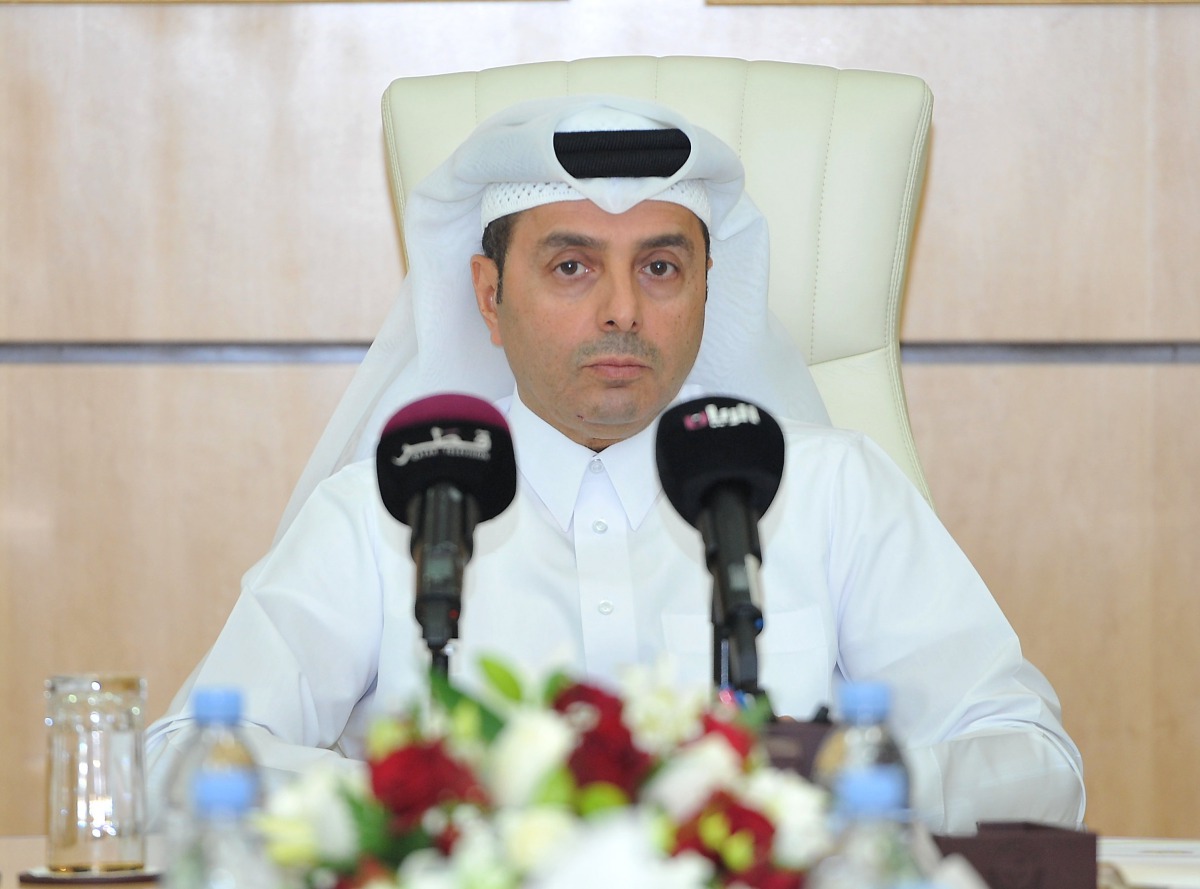
Minister of Education and Higher Education, H E Dr. Mohammed bin Abdulwahed Al Hammadi
The Ministry of Education and Higher Education has succeeded, with distinction, in completing 2019-20 academic year, despite COVID-19 epidemic, which halted education in most countries.
The Ministry implemented distance learning education system to complete the academic year after parents and society feared the effects of the epidemic on the health and safety of their children, as well as a halt in education.
Minister of Education and Higher Education, H E Dr. Mohammed bin Abdulwahed Al Hammadi emphasised that the Ministry had taken all the preventive and precautionary measures, among the measures taken by the country to curb the outbreak of coronavirus, to ensure the health and safety of the students and all of the schools’ employees during the exams.
The great success of the distance learning process in completing the academic year 2019-20 confirms that the coronavirus pandemic did not affected the educational process, or even the start or start of the new academic year. On March 23, students began their studies through the distance education system and the Ministry cancelled the end of the second semester tests for the students from grade 1 to11 and replaced it by conducting an evaluation process for these students, provided that general and specialised high school students take the end of the second semester tests as usual.
These tests started on June 1 and it will end on June 13.
Undersecretary of the Ministry of Education and Higher Education Dr. Ibrahim bin Saleh Al Nuaimi said in an interview to Qatar News Agency (QNA) that the evaluation process and the standards taken for the students from grade 1 to11 that planning for the evaluation process was carried out in parallel with the education process through planning for daily and weekly assessments.
He added that they are continuous assessments covering all learning goals and emphasized the joint responsibility of students, teachers, parents, school administrations and the education affairs sector.
He pointed out that the Ministry has received positive indicators in this regard, and there is accountability for any failure of all parties involved in the evaluation process in the Ministry. He said that the Ministry prepared the educational content for distance study for each of the academic levels, by filming and producing videos of daily lessons, with a focus on providing the student with the concepts and values of these lessons on electronic links via the digital platforms provided. With regard to distance learning for people with special needs, the Undersecretary said that the Ministry provided educational materials that meet the needs of this group of students according to the level and type of disability.
On the level of private schools, the Undersecretary confirmed that the evaluation process went well, where the application rate reached 100 percent, indicating the multiplicity of systems used in private schools as a result of different experiences in the e-learning system, and the different policies adopted according to the special systems and curricula in each school.
Educational experts as well as schools administrations, teachers and specialists emphasized that the remote educational programs have assisted students to reach the content and do their homework through the internet, and so it reduced the teachers’ efforts in the daily and weekly evaluation process.
In addition it enabled the teacher in another hand to share the interactive lessons through using the whiteboard, texts, audio and video, as well as recording the illustrated and viewing lessons, which enabled the students to reach them at all times.