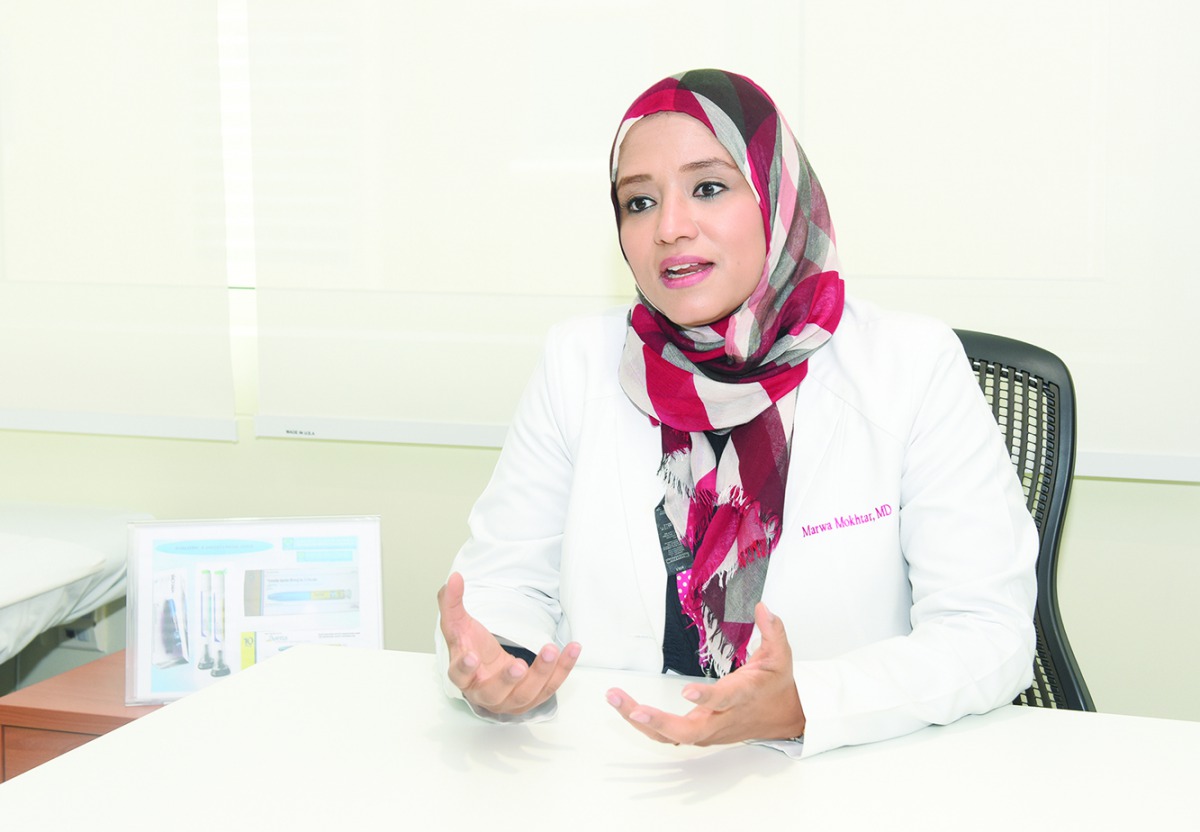
Dr Marwa Mokhtar, Consultant at Qatar Metabolic Institute.
Doha: Most patients seeking non-surgical weight loss solutions at the National Obesity Treatment Center can achieve a healthy body weight within six to twelve months of entering a weight loss program, says Dr Marwa Gomaa Hussein Mokhtar, a Consultant at the Qatar Metabolic Institute.
Hamad Medical Corporation’s (HMC) National Obesity Treatment Center, which sits under the Qatar Metabolic Institute (QMI) delivers holistic, multidisciplinary care for patients seeing medical and surgical management of obesity and the prevention of weight-related diseases. Since its opening in last year over 4,700 patients have benefited from the Center’s services.
Located in Hamad Bin Khalifa Medical City, patients are normally referred to the National Obesity Treatment Center from other HMC outpatient clinics, including the National Diabetes Centers and obstetrics and gynecology departments, as well as from primary healthcare centers.
Staffed by a multidisciplinary team, all patients referred to the Center undergo a comprehensive clinical evaluation in advance of a personalized weight loss treatment plan being developed.
According to Dr. Mokhtar, not all patients are candidates for surgical weight loss procedures and some patients who do meet the clinical standards that qualify them for surgical weight loss choose a non-surgical solution.
She says that while all weight loss programs offered at the National Obesity Treatment Center emphasize lifestyle modifications, highlighting adjustments to the types and quantities of foods consumed and the incorporation of physical activity goals, patients who seek non-surgical solutions tend to need extra support with setting realistic goals.
Dr. Mokhtar, who is an endocrinology and diabetes consultant, says the causes of obesity are complex, noting there may be many interrelated factors, such as genetics, lifestyle, diet, underlying health conditions, and how an individual’s body uses energy.
“For some individuals, weight loss is essential to avoid or manage chronic diseases and conditions associated with obesity, such as diabetes, pre-diabetes, and high blood pressure. The longer a person is obese, the more significant obesity-related risk factors become. Having a BMI equal to or greater than 30 is a major risk factor for a number of chronic diseases,” says Dr. Mokhtar.
Body Mass Index, or BMI, is a simple index of weight-for-height that is commonly used to classify underweight, overweight, and obesity in adults. It is defined as one’s weight in kilograms divided by the square of one’s height in meters (kg/m2). Individuals with a BMI greater than 30, which approximates to 30 pounds of excess weight, are at risk of developing serious health problems.
Generally, a healthy weight among individuals aged 20 or over is defined as a BMI equal to or greater than 19 and less than 25, and a BMI of 40 or more is used to identify people who are extremely obese and most at risk for the health complications of obesity.
Each patient seeking treatment at the National Obesity Treatment Center undergoes a comprehensive medical assessment that covers their complete health history, ranging from sleep patterns to hormone health.
Successful non-surgical weight loss programs are based on a combination of diet, behavior modification, and regular exercise, adding that prescription medications may also be part of the treatment plan.