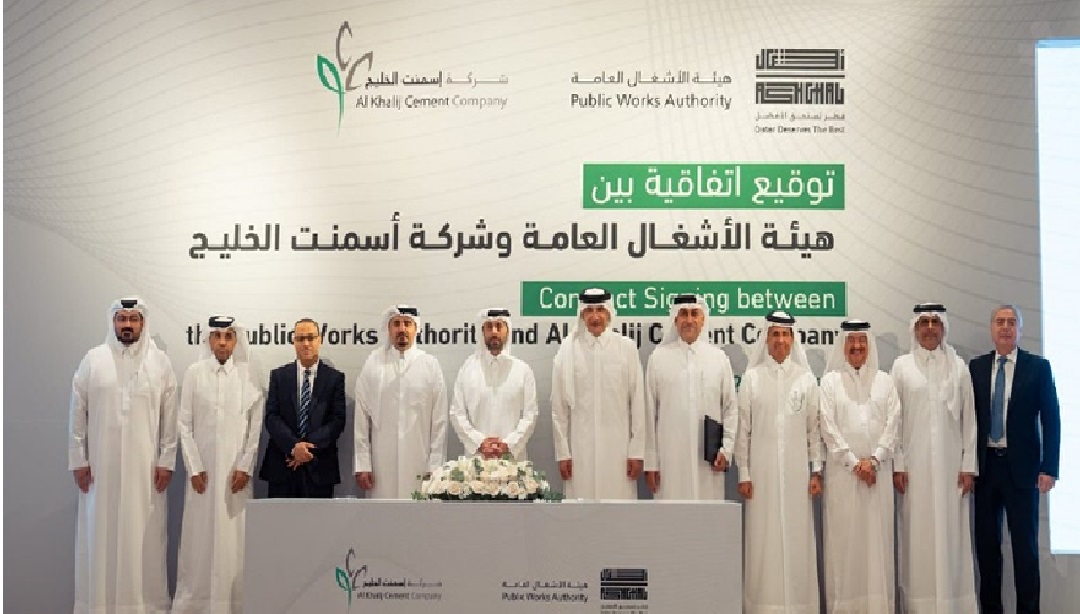
Doha, Qatar: The Public Works Authority, Ashghal, signed a Memorandum of Understanding (MoU) for a strategic partnership with Al Khalij Cement Company (AKCC), aimed at recycling 100 percent of the sludge generated by Ashghal's wastewater treatment plants across Qatar.
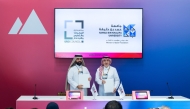
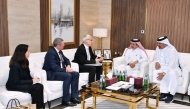
The signing ceremony was witnessed by the Minister of Municipality, HE Abdullah bin Hamad bin Abdullah Al Attiyah; Chairman of the Board of Qatari Investors Group, Abdullah bin Nasser Al Misnad; and President of the Public Works Authority 'Ashghal', HE Eng. Mohammed bin Abdulaziz Al Meer along with a select group of representatives from various concerned entities.
This initiative represents a significant step toward implementing the principles of the circular economy in Qatar, where massive quantities of sludge, ranging between 744,000 and 1.29 million tons, will be converted into clean energy over a period of five years. Previously considered waste, the sludge will now become a value-added resource through sustainable treatment and full recycling. The agreement also contributes to solving sludge disposal challenges by avoiding its transportation and/or landfilling, thus reducing carbon emissions.
On the importance of the agreement, HE Eng. Mohammed bin Abdulaziz Al Meer stated: "This partnership with Al Khalij Cement Company reflects Ashghal's commitment to achieving environmental sustainability and the circular economy, through the integrated recycling of wastewater, by using treated water for irrigation and cooling and utilizing solid byproducts as fuel catalysts and inputs in cement products."
On his part, Abdullah bin Nasser Al Misnad said: "This partnership embodies our ambitious vision to drive sustainable growth, as we focus on integrating alternative fuels and renewable materials into our operations to reduce emissions, particularly carbon emissions, while simultaneously protecting natural resources. Through enhancing our competitiveness, we aim to achieve full alignment with Qatar National Vision 2030."
This agreement comes as part of Ashghal's efforts to develop sustainable waste management solutions, where the authority recycles 98 percent of treated wastewater and uses it in agriculture, afforestation and strategic storage, in support of environmental sustainability in the State of Qatar.