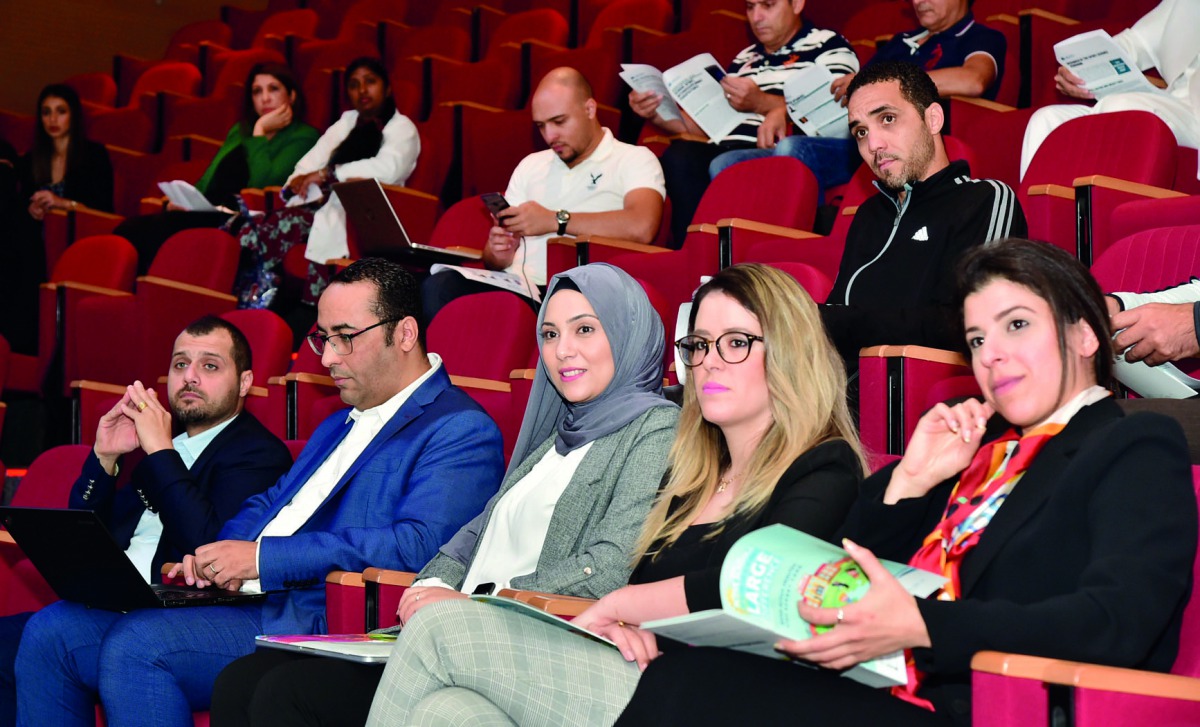
The event aimed at providing an opportunity for academic researchers and experts in the field to share their knowledge and experience.
The Sport Science Program (SSP), at Qatar University’s (QU) College of Arts and Sciences (CAS) organised a symposium titled “School Sport: Interdisciplinary Perspective.” The event aimed to provide an opportunity for academic researchers and experts in the field to share their knowledge and experience on topics such as the importance of school sport in enhancing physical activity and healthy lifestyles as well as the correlation of well-being and academic performance.
The symposium’s agenda featured a wide range of topics including “Results from Qatar’s 2018 Report Card on Physical Activity for Children and Youth,” presented by Researcher Suzan Al-Sayegh, Aspetar; “Levels of Physical Activity and Sedentary Behavior in QU Community,” presented by Dr Lina Majed, Assistant Professor in CAS; “Physical Fitness and Physical Self-Concept of Male and Female Young Adults in Qatar” presented by Dr Bryna Chrismas, Assistant Professor in CAS; “Use of School-based High-intensity Interval Training to Improve Adolescents’ Health and Fitness,” presented by Researcher Dr. Kathryn Weston, Qatar Metabolic Institute, Hamad Medical Corporation; and “A Skill Theme Approach Teaching for Physical Activity in Schools,” presented by Dr Ferman Konukman Assistant Professor, Sport Science Program.
The second session involved a presentation on “Physical Activity and Health,” by Dr Abdelhamid Kerkadi Associate Professor, Human Nutrition Department in CAS followed by Anthony Hazeldine, Head of National Talent Identification Program, who presented on “ASPIRE Talent Identification Program in Schools in Qatar.” The symposium ended with a panel discussion by two physical education teachers Karim Qabbary and Lee Dewaal, who offered their insights on opportunities and challenges of PE lessons in schools.
Dr Mahfoud Amara, Director of QU’s Sport Science Program said, “The results on the effect of physical inactivity on population health should be an incentive for better and cohesive interventions of sport science and health community in the country. Increasing the level and diversity of physical activity in schools is crucial.”
He added, “To date, 18.8 percent of Qatari boys and 15.5 percent of Qatari girls below the age of 20 years are obese and these figures are still rising. Moreover, the latest Qatar Active Healthy Kids Report Card (2019) showed that only 25 percent of children meet the physical activity guidelines for health, while the large majority are still considered inactive. Developing sport practice at a grass roots level has the same importance as developing a strong base line for elite sport in Qatar.”