Doha, Qatar: Virginia Commonwealth School of the Arts Qatar is pioneering research at the intersection of art, design and science, collaborating with Weill Cornell Medicine-Qatar to explore how built environments affect autistic learners using neuroimaging and virtual reality technologies.
The study, led by Associate Dean for Academic Affairs Dr Cherif Amor, examines how environmental factors influence brain activity, moving beyond traditional design approaches based largely on perception and preference.
“Our work sits at the intersection of design, neuroscience and behavioural science,” Dr Amor said, noting that the research aims to understand what occurs in the brain when individuals experience different environments.
Building on earlier findings that neurodiverse learners are particularly sensitive to elements such as light, colour and sound, the study focuses on generating evidence-based design strategies that support learning and wellbeing.
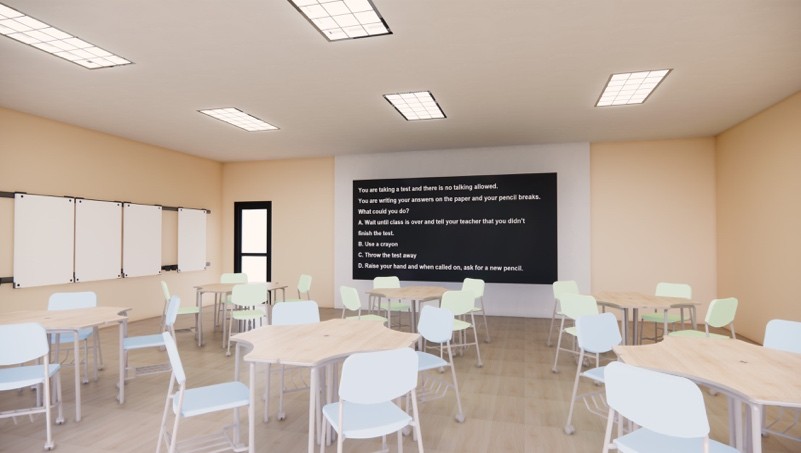
Using immersive virtual reality classrooms, autistic participants were exposed to varying lighting conditions, including warm white, cool white, daylight and achromatic settings. Their brain activity was simultaneously monitored using electroencephalography (EEG), while they completed tasks ranging from mathematical problem-solving to reading comprehension and decision-making exercises.
Findings revealed that cool white lighting enhanced activity in the prefrontal cortex, a region associated with attention and executive functioning. In contrast, warm white and daylight settings were found to induce stress and reduce cognitive efficiency in some cases. Dr Ghizlane Bendriss, Assistant Professor of Biology at WCM-Q and co-principal investigator, highlighted the importance of objective measurement tools in such studies. She noted that EEG provided direct insight into how sensory stimuli influence neural processing, adding that advanced artificial intelligence and statistical methods were crucial in analysing complex datasets.
The research was supported by the VCU Quest Fund and involved collaboration across institutions, including Virginia Commonwealth University in the United States. Experts in psychology, interior design, virtual reality and data analysis contributed to the multidisciplinary project, ensuring robust scientific and design integration.
Researchers emphasised that the findings reinforce the growing recognition that design decisions have a tangible impact on how individuals think, feel and function. The results are expected to guide architects, designers and healthcare professionals in creating environments that better accommodate neurodiverse populations.
Looking ahead, the team plans to expand the study by comparing responses between neurodiverse and neurotypical participants, while also examining additional environmental variables beyond lighting.
“With advances in neurotechnology, we can build a stronger scientific foundation for design decisions,” Dr Amor said. “This will help develop evidence-based guidelines for architecture, interior design and lighting systems that genuinely support users’ needs.