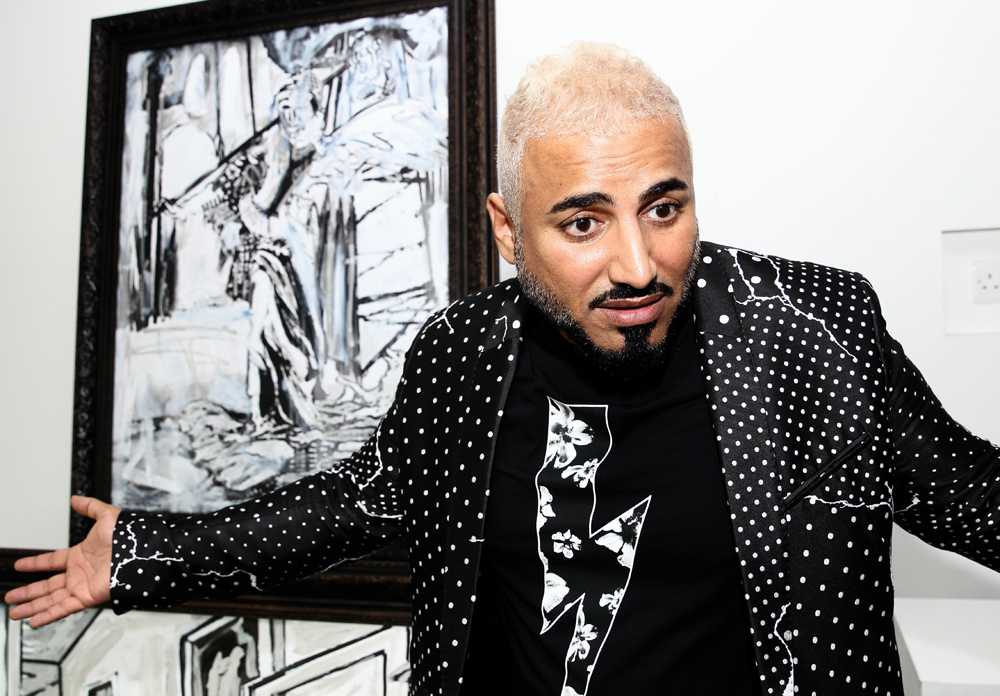
Qatari artist Faisal Al Hajri explains about one of his installations at the Open Studio Night hosted by the Fire Station on Wednesday. Pic: Qassim Rahmatullah / The Peninsula
Qatari artist Faisal Al Hajri is no ordinary visual artist.
Ideas behind Al Hajri’s conceptual art are a product of research and reflection on human behaviour delving into psychology and anthropology.
Earning a degree in Art in Education from Qatar University, the artist ventured into teaching, then gave it up to focus on his art. His purpose as an artist is to invite the beholder into a dialogue with his artworks resulting to a better understanding about themselves.
Al Hajri is one of the 19 artists in residence at the Fire Station which recently held an Open Studio Night to provide the public a peek into the projects in development of the Qatar-based artists.
Speaking to the media, he said his interest lies in topics that convey reflection of stories of collective human consciousness and the possibility that art could be a means to navigate the future.
One of his artworks exactly depict the idea of collective consciousness and being around a group.
“Through my own research, I chose elements that can bond people together which are love, peace and beauty - ultimate values that people carry and unite them,” he said.
One of his major works to look forward to when the fourth cycle of Fire Station’s Artist in Residence mounts the much-awaited exhibition which serves as culmination of the months-long programme in July is titled “Blockade and mental bondage.”
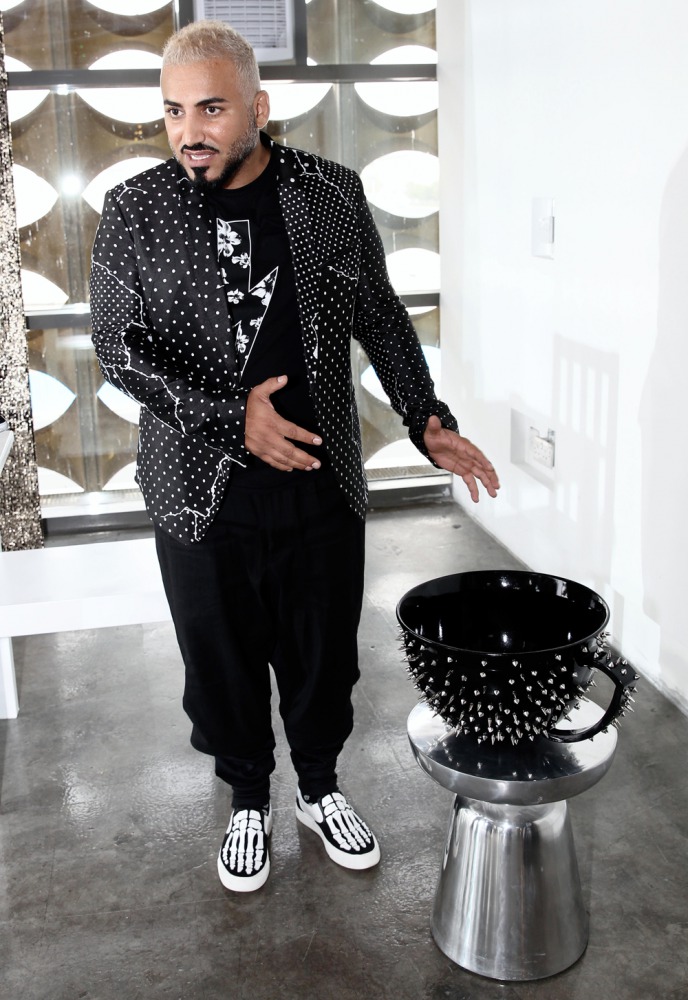
It is a white rectangular table with two chairs attached on both ends making it difficult to sit, and on it is small black cup studded with metal spikes making it hard to hold.
“It is a bit political. This small cup stands for mental bondage. The table represents an invitation for a dialogue but there’s discomfort in this dialogue since the person cannot sit without behaving in a different way,” he explained.
“One Million Stars” — another work is “a philosophy and vision that I want to reach out as a person and as a teacher or a philosopher to one million people around the world and teach them my knowledge to inspire the world and make the world more beautiful. It is shaped vertically like reaching to the universe.”
Other intriguing pieces Al Hajri created during his residency are paintings on “Body limitation and mind possibilities” and “Love and madness” as well as installations exploring the “Transcendental idea of knowledge.”
Monochrome is evident in all his works for his residency, through which he wanted to express the idea of duality. This is opposed to a collection he previously displayed in a show last year which used dramatic and intense colours, he explained.