Qatar’s maritime laws regulating the practice of services of maritime shipping intermediaries need to be reviewed to make them in line with international conventions such as ‘Hamburg Rules’ to enhance maritime and logistics and international trade, echoed a panel of experts at a discussion on enhance ‘Maritime Logistics’ on the second day of the ongoing Silk Road Exhibition & One Belt One Road Conference, organized by the Doha-based Dar Al Sharq Group.
Most of the panelists in the discussion yesterday noted that the existing ‘Law No. 12 of 2012 Regulating the Practice of Services of Maritime Shipping Intermediaries’ need to be updated to make it more balanced and fair protecting the interests of both the freight forwarder (non-vessel operating common carrier, NVOCC) and shipper to boost trade.
The Hamburg Rules are a set of rules governing the international shipment of goods, resulting from the United Nations International Convention on the Carriage of Goods by Sea adopted in Hamburg on March 31, 1978. The Convention was an attempt to form a uniform legal base for the transportation of goods on oceangoing ships.
“Qatar is a party to the essential international conventions that regulate the technical aspects of shipping, but it needs to do more with regard to laws that deal with loss of private businesses. We should take care of that to make it more balanced and safeguard the interests of shippers and carriers,” Professor Nader Ibrahim, Qatar University, told The Peninsula on the sidelines of the event.
Professor Nader, who teaches commercial and maritime laws at QU, added: “Qatari maritime laws are mainly based on The Hague Rules which were created in 1924. They favoured the carriers against the interests of shippers (the cargo owners). The Hamburg Rules are more balanced in terms of protecting the interests of both the parties—carriers as well as the cargo owners.”
He reiterated that an update to the existing Qatari maritime laws and extension to other conventions will boost the confidence of freight forwarders. And in case of any dispute over loss or damage of goods, the forwarders will be able to claim indemnity more appropriately as per the actual value of the loss or damage.
Professor Nader noted that according to the existing Qatari maritime law the maximum compensation in case of the loss of a container or damage of goods is only QR1000, which need to be reviewed and updated given the kind of valuable goods being shipped today. He also noted that the value of a container with computers may go up to several millions.
The Hamburg Rules allow calculating the imputed value of the goods for indemnity claims to make it more balanced.
He said that the risks involved in the maritime transportation have significantly reduced with time so the rules need to be updated accordingly.
In international seaborne trade there are several parties involved in the transportation of goods from one port to another. One of the important parties in the chain is terminal operators who are responsible of loading, discharging, handling, storing of cargos at ports. So the question rises, what law should regulate operator’s liability in case of a cargo loss or damage occurred when the goods are under operator’s custody?
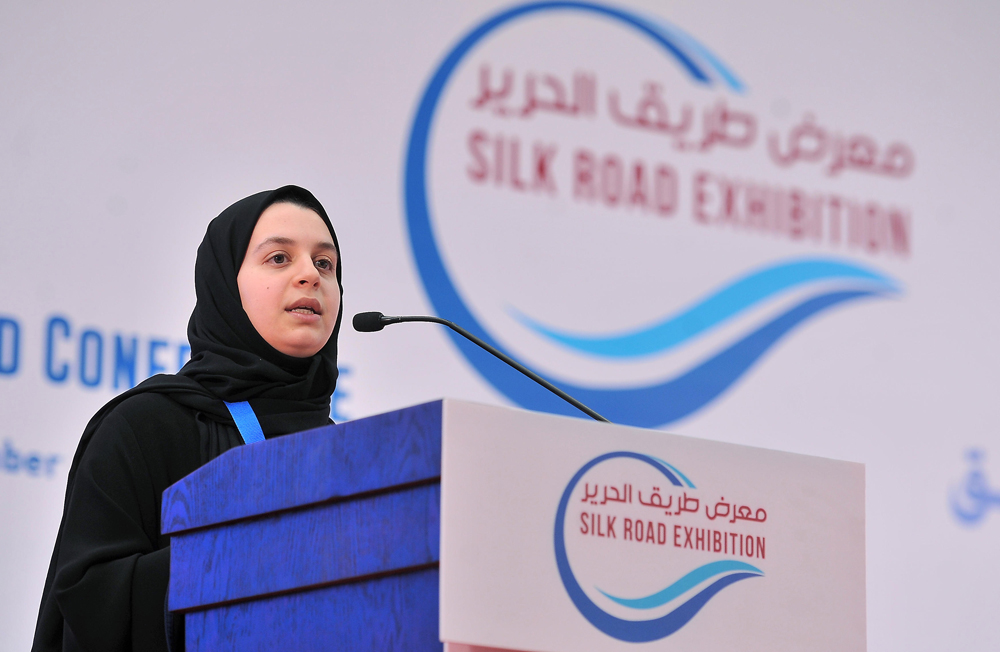
Dr Mona Al Marzouqui, Associate Dean for Research and Graduate Studies at QU, in her presentation, also highlighted the liability of terminal operators in case of cargo loss or damage.
“The Maritime Law of Qatar No (15) of 1980 is silent about that. Thus we need to apply the general rules of torts in the civil law. That means the claimant can file a case against the terminal operator and the operator is obliged to pay the full amount of the compensation. That would cause financial harm to the terminal operator,” added Dr Mona who also teaches maritime and commercial law at QU.
She added: “On the other hand, the Maritime Law of Qatar regulates the liability of carrier under the contract of carriage of goods by sea and allow him to limit his liability to the amount specified in the law. Thus, there is protection to the carrier, but not to the terminal operator.”
Dr Mona also said that to protect the terminal operator’s interests Qatar should ratify the United Nation Convention on the Liability of Terminal Operator in the International Trade (Vienna Convention of 1991) to fill in the gaps in the law and provide more protection to the terminal operator.
The said Convention has been ratified by four states and requires one more ratification to enter into force. “We hope that Qatar ratify this convention so that the convention enters into force among state party to the convention. This convention will remove any ambiguity towards the applicable law when terminal operators are to be held liable for cargo loss in international trade,” she reiterated.