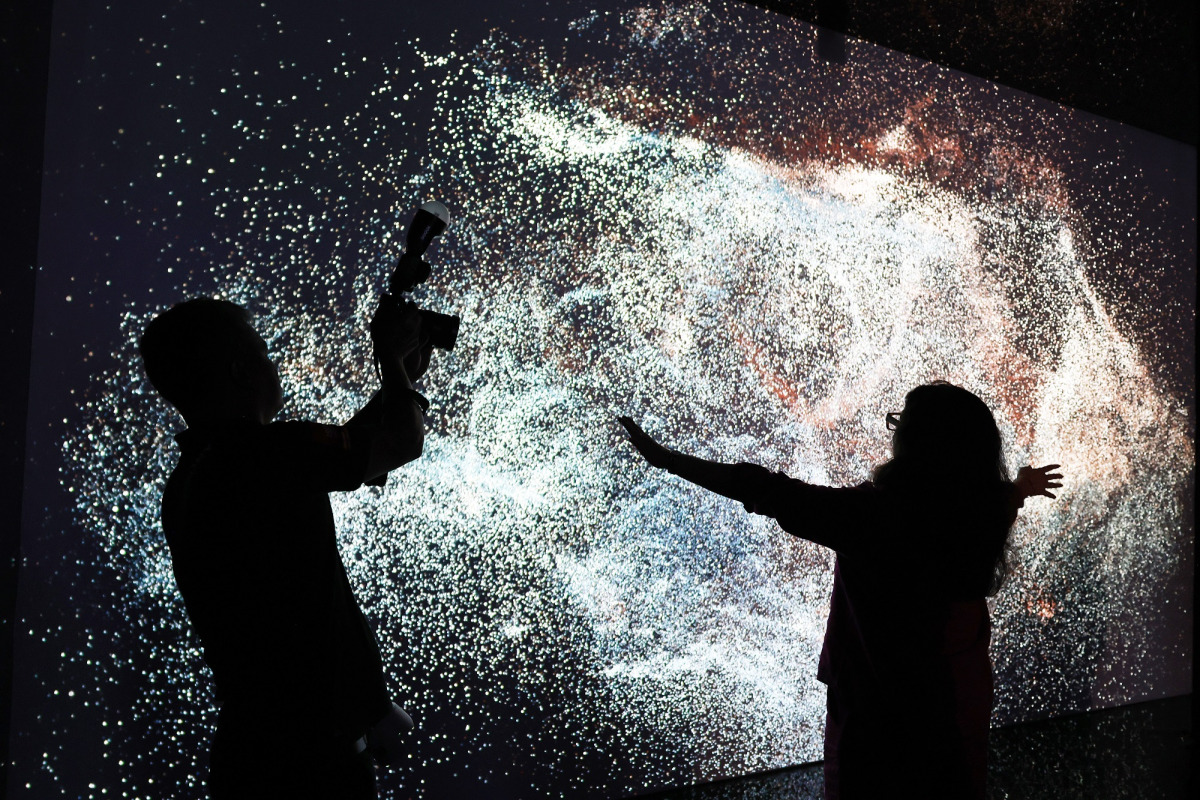
All That Is Unseen examines the connections between breath, life and the cosmos. Pic: Rajan Vadakkemuriyil/The Peninsula
Doha, Qatar: Northwestern University in Qatar’s (NU-Q) Media Majlis Museum is bringing an immersive exhibition to Doha, marking the first touring exhibition by ACMI, Australia’s national museum of screen culture, to the region and the first major exhibition in Qatar and the wider region by London-based artist collective Marshmallow Laser Feast (MLF).
Titled All That Is Unseen, the exhibition, presented in partnership with ACMI, has been reimagined for Doha, with its audience journey and context adapted to offer a new dimension to MLF’s work.
Opening to public today at NU-Q’s campus in Education City, the exhibition uses large-scale video works, guided meditation and interactive experiences to explore the hidden systems connecting all living things, from a single breath to the cosmos.
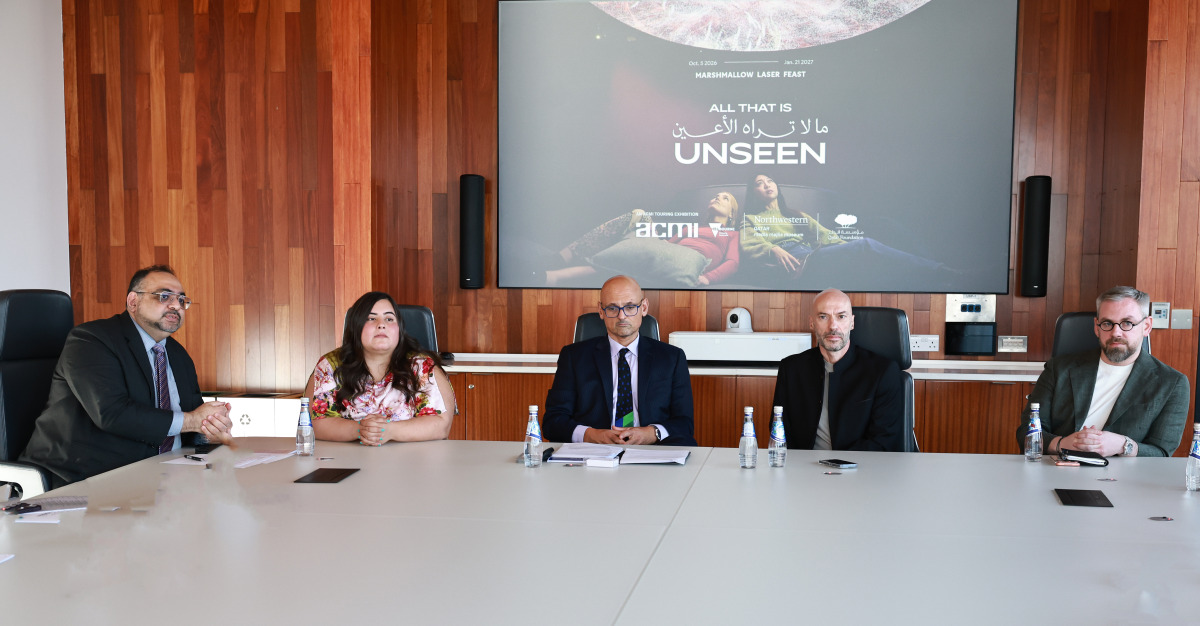
NU-Q Dean and CEO Marwan M. Kraidy (centre) with other officials speaking to the media ahead of the preview of “All That Is Unseen” on Sunday. Photo Rajan Vadakkemuriyil/The Peninsula
At a media preview yesterday, NU-Q Dean and CEO Marwan M. Kraidy described the exhibition as an opportunity to make the unseen not only visible but experienced.
“I always like to say that education is about making the invisible visible. Here we have an exhibition about basically making the unseen not only seen, but making the unseen experienced, immersed in, and encountered in very creative, thought-provoking, and as you will see, also feeling-provoking ways,” he said.
Kraidy described the project as a “truly transcontinental collaboration” involving the Media Majlis Museum, ACMI and MLF, an art and research collective working at the intersection of art, science and technology.
He said the exhibition encourages visitors to reflect on the building blocks that make up human life, the body and the world, and the connections between people and the natural environment.
“What do we know after seeing an exhibit like this one that we didn’t know before?” Kraidy asked, adding that visitors would hopefully leave not simply with answers, but with a greater ability to ask questions about “the human place in the universe” and humanity’s connection to others and the natural world.
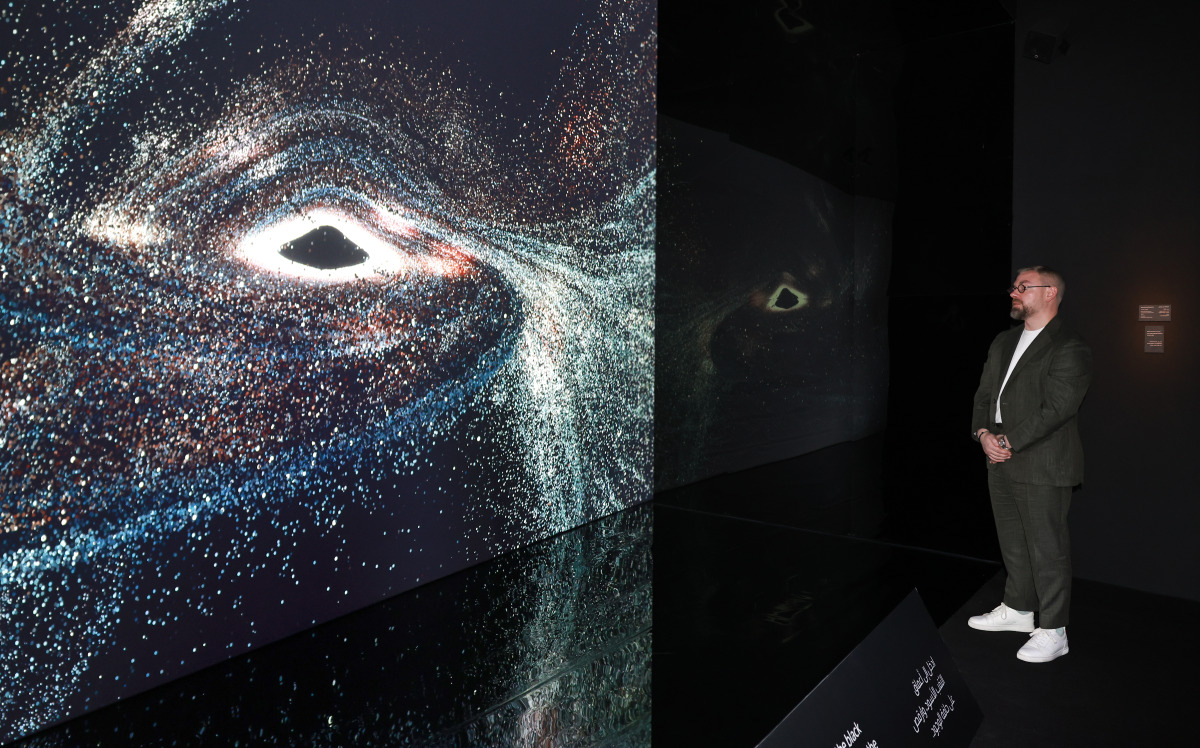
Photo by Rajan Vadakkemuriyil/The Peninsula
Media Majlis Museum Director Alfredo Cramerotti said the exhibition is based on scientific evidence that has been re-contextualised and presented through an artistic format.
“We take, actually, science. We take journalism. We take communication, technology. We translate them into an accessible format, an artistic format,” he said, adding that the exhibition was intended for students, faculty, Education City and the wider community in Doha, Qatar and the region.
Cramerotti said the partnership with ACMI was particularly significant as the museum develops collaborations with national and international institutions on topics relevant to the region.
Curator of Art, Media and Technology Jack Thomas-Taylor said the exhibition had been around three years in development and brought together art, data, science and evidence.
He said the exhibition begins with evidence of the human body and takes visitors through processes exploring the relationship between humans and nature.
“It starts with breath, it starts with oxygen, and that’s one thing which doesn’t discriminate,” Thomas-Taylor said.
He said the exhibition is not intended to provide answers but to encourage visitors to feel more connected to nature and recognise similarities between the human body and the natural world. The exhibition combines data and evidence with artworks and sound, creating an immersive experience designed to encourage visitors to slow down, disconnect from technology and reconnect with themselves.
All That Is Unseen will be open to the public from October 5, 2026 to January 21, 2027, from 10am to 8pm, Sunday to Thursday. Admission is free.