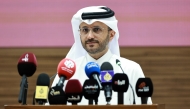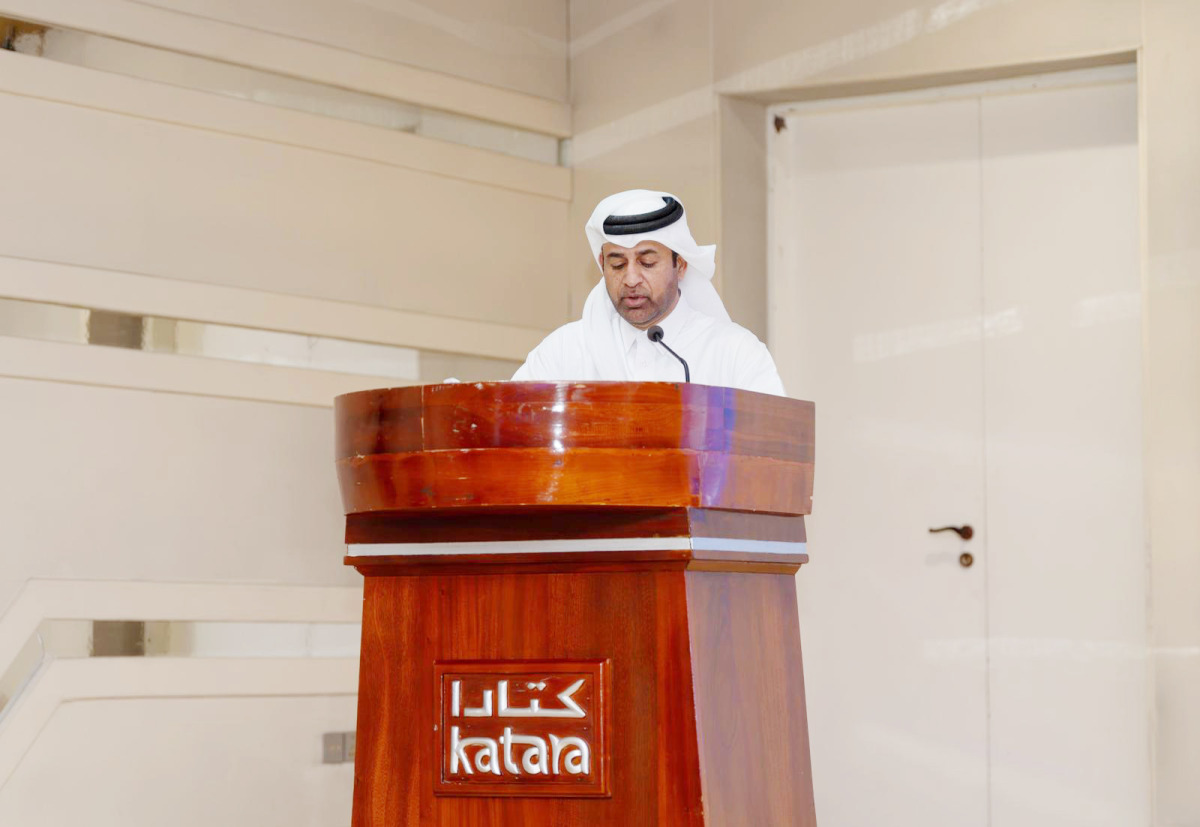
General Manager of the Cultural Village Foundation (Katara) and President of the Global Public Diplomacy Network (GPDNET), Prof. Khalid bin Ibrahim Al-Sulaiti
Doha, Qatar: General Manager of the Cultural Village Foundation (Katara) and President of the Global Public Diplomacy Network (GPDNET), Prof. Khalid bin Ibrahim Al-Sulaiti, has reaffirmed Qatar’s commitment to strengthening international cultural cooperation, promoting dialogue between nations and empowering young people through public diplomacy.
Speaking at the opening of the 11th General Assembly of GPDNET, held at Katara yesterday, Al-Sulaiti stressed that culture, dialogue and cooperation remain fundamental pillars for building stronger relationships between peoples and nations.
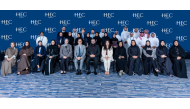
The meeting, attended by representatives of member institutions from across the world, witnessed the admission of Uzbekistan, bringing the network’s membership to 30.
Welcoming participants, Al-Sulaiti said the gathering reflected the shared vision of member institutions and their determination to strengthen international understanding through meaningful cultural engagement.
He highlighted the importance of leveraging the diverse expertise and capabilities of member institutions to develop innovative initiatives capable of delivering sustainable benefits to communities worldwide.
According to Al-Sulaiti, the General Assembly provides an important platform for exchanging perspectives, strengthening partnerships and developing practical programmes that enhance the effectiveness of public diplomacy.
He emphasised that empowering young people, strengthening institutional capacities and embracing digital technologies are essential to expanding the network’s international reach.
Al-Sulaiti particularly highlighted the proposed GPDNET Academy and Youth Mentoring Project as major initiatives designed to equip future generations with the knowledge and skills required to advance cross-cultural understanding.
He encouraged member institutions to move beyond exchanging ideas towards implementing joint projects that deliver measurable benefits and strengthen their international engagement.
Reflecting on the network’s development, Al-Sulaiti noted that its membership had expanded from nine countries at its establishment to 30, demonstrating its growing international influence. He reiterated Qatar’s commitment, through Katara, to supporting member institutions and promoting their cultural activities and initiatives internationally. Citing Qatar’s successful hosting of the FIFA World Cup 2022, he recalled the important contributions of network members in promoting events and activities organised in Doha during the tournament, which attracted millions of visitors.
Al-Sulaiti also underscored the importance of developing the network’s website into an effective platform for exchanging knowledge, showcasing institutional achievements and facilitating cooperation. He said the proposed academy would strengthen collaboration with the Qatar International Academy and provide specialised training programmes for representatives of member institutions.
Concluding his remarks, Al-Sulaiti reaffirmed Katara’s readiness to welcome network members to Qatar throughout the year, stressing that collective action and strong institutional relationships remain central to the organisation’s continued success.
He described the network as a unified family working towards common objectives and greater achievements.
Meanwhile, the General Assembly approved Uzbekistan’s membership through the Center for Foreign Policy Studies and International Initiatives under the Uzbek Ministry of Foreign Affairs.
Following the approval, Al-Sulaiti signed a memorandum of understanding with the new member to strengthen institutional cooperation and expand international partnerships.
GPDNET Secretary-General Maryam Majid Al-Saad welcomed the expansion, describing Uzbekistan’s accession as an opportunity to enhance geographical diversity and knowledge exchange. She attributed the network’s achievements to the commitment and collective efforts of its members, urging greater emphasis on translating proposals into practical initiatives. The assembly also discussed developing the network’s digital platform, strengthening academic and training programmes, and expanding youth participation.