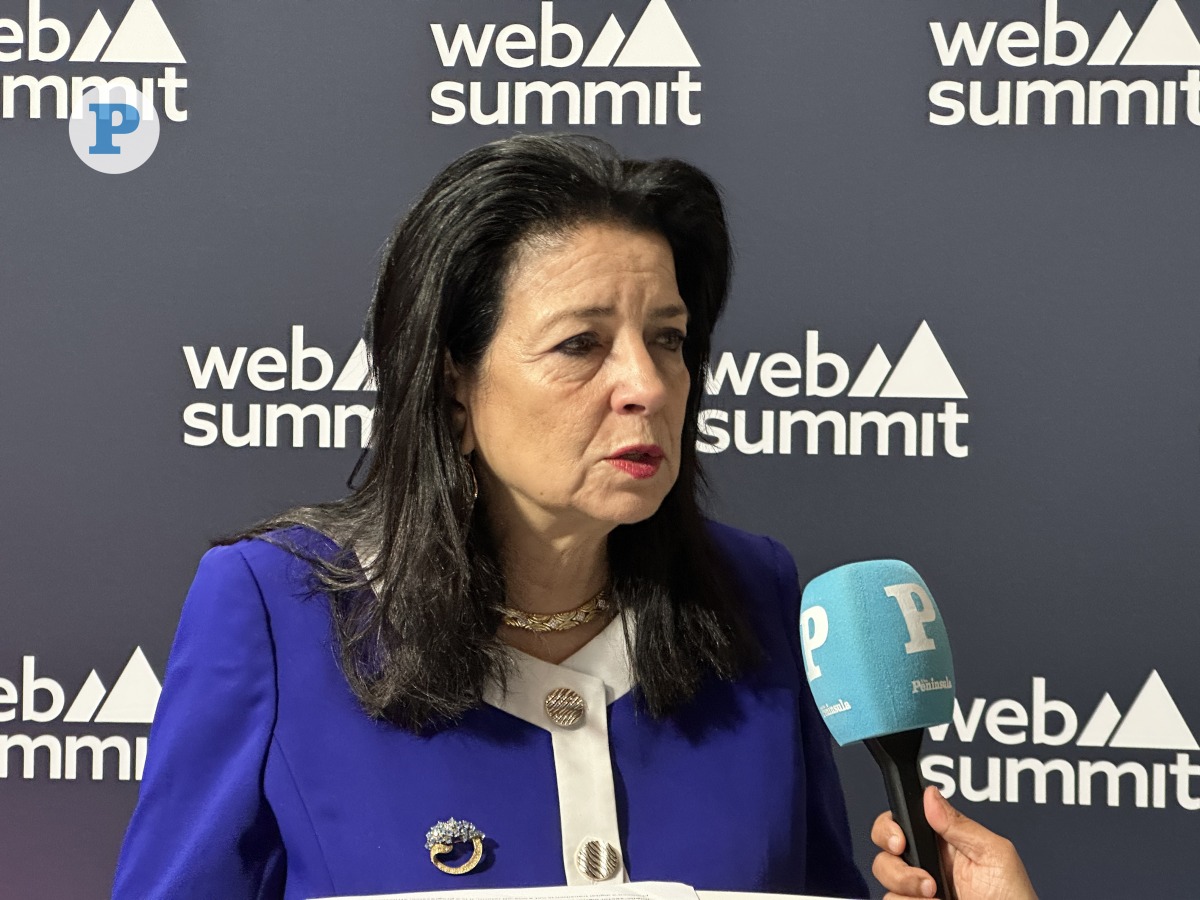
Moroccan Minister of Digital Transition and Administration Reform H E Amal El Fallah Seghrouchni. Pic: Alexandra Evangelista\The Peninsula
Doha, Qatar: Morocco is leveraging Web Summit Qatar 2026 to advance high-level conversations on artificial intelligence, digital governance and cross-border cooperation, according to Minister of Digital Transition and Administration Reform, H E Amal El Fallah Seghrouchni who is visiting Doha for the global technology gathering.
In an exclusive interview with The Peninsula yesterday, the Minister said the Summit provides a timely platform to align policy thinking on AI with broader questions of governance, data protection and digital identity. “During this Web Summit Qatar, what is expected from my point of view is to have high-level discussion on AI, of course, on digital in general, but also in governance,” she said. “By governance, I mean the high-level policies for data protection, for identity issues, digital identity issues, and also about the treatment we can put in data management.”
As discussions continue at Web Summit Qatar 2026, the Moroccan Minister expressed optimism that the event would translate dialogue into action, both through shared best practices and new alliances. For Morocco, she said, the goal is clear: to combine strong governance, human-centred policies and advanced technologies in shaping a digital future that is sustainable, inclusive and globally connected.
She added that such discussions are essential as countries accelerate their digital transformation agendas, noting that Morocco’s own journey has been marked by a strong focus on policy frameworks alongside technology adoption. Looking ahead to the outcomes of her visit, the Minister stressed that knowledge exchange would be a key takeaway. “The first thing is to exchange,” she said. “The takeaway is the best practices that can emerge from discussions with other people.”
Beyond dialogue, she highlighted Morocco’s ambition to build concrete partnerships around its global initiatives. The country is leading the Digital for Sustainable Development (D4SD) initiative, under the mandate of the United Nations General Assembly, which aims to position Africa and the Middle East as a hub for inclusive and sustainable digital growth. “One takeaway could be agreement with other ministers on joining this initiative,” she said, underlining the importance of bringing countries together around shared digital priorities.
Reflecting on Morocco’s progress at home, H E Seghrouchni said the national digital transition was formally launched two years ago, guided by the strategic orientations of H M King Mohammed VI. “They are very inspiring for the whole population,” she said, describing digital transition as a multi-layered process that goes beyond technology alone.
“It is many folds,” she said. “We need to change the mindset of the population, the mindset of administrative officials, and also the technical part of digital transition.” In Morocco’s case, artificial intelligence has been identified as a central lever to drive efficiency and impact across government services.
On the citizen side, the government has rolled out targeted programmes to support digital inclusion, particularly among young people. “For example, for the population, we introduced several programmes for young people, for example, for the age 18 population,” she said. At the same time, the administration itself has undergone significant reform, including the launch of a national digital portal offering more than 600 administrative services online.
Governance has been another major pillar of the reform agenda. Morocco has been working across multiple dimensions, from institutional coordination to legal frameworks. “The last thing is the law we push for digital X.O,” the Minister said, referring to new legislation that addresses data governance, algorithms, artificial intelligence and interoperability between public services.
A major milestone was reached earlier this year with the launch of a flagship national AI programme. “On January 12, we launched a huge programme called ‘Morocco, AI Made in Morocco’,” she said. The initiative provides a national platform to debate AI-related issues while accelerating practical deployment across sectors.
As part of this effort, Morocco has also established a network of institutes dedicated to advanced skills and research. “We launched a network of institutes of excellence in AI and data science called Jazari Institutes,” she said. These centres are designed to support the development and deployment of AI at the national level, strengthening local expertise and innovation capacity.
Despite the progress, H E Seghrouchni acknowledged that large-scale digital transformation requires deep cultural change within government institutions and society at large. “There’s a lot that has been done by the government,” she said, “but we need, first, to have adoption of the transformation.”
She explained that adoption is closely tied to mindset. While younger generations are often comfortable with digital tools, other segments of society require additional support.
Creating an inclusive “atmosphere of digitalisation,” as she described it, is therefore central to Morocco’s approach, ensuring that no group is left behind as services move online and AI becomes more embedded in daily life.
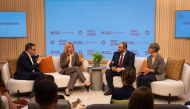
Seghrouchni will be speaking at a ministerial panel on ‘Governing the AI era: Digital Transformation and Growth’, today at the Web Summit Qatar 2026.