The strong relations of Qatari organisations with United Nations were highlighted during a panel discussion on the sidelines of a programme held here yesterday to mark United Nations Day under a them ‘State of Qatar and United Nations Partnership’.
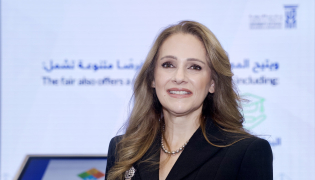
The panel discussion was moderated by Director of the International Cooperation Department at the Ministry of Foreign Affairs Ambassador Tariq Ali Al Ansari. A panelist, Chief Executive Officer of the Qatar Foundation for Social Work (QFSW) Amal Al Mannai said that the relationship between the foundation and the United Nations is centered on the consultative membership obtained by the foundation in 2016.
In this regards, she said that the large international events mandated by the foundation to organize a conference on disability and development, which will be held in December, with the participation of all United Nations organizations.
She noted that an important session will be held in cooperation with the Ministry of Foreign Affairs and Unesco on education, the session mimics the convergence of the Convention on the Rights of Persons with Disabilities with the United Nations sustainable development agenda and maximizing access to education, employment, health and other important areas.
Al Mannai noted that the foundation has played a major role in the design of the national development strategy. It is currently responsible for more than 42 projects and needs the expertise of UN organizations in capacity building. For his part, Director of the Diplomatic Institute at the Ministry of Foreign Affairs Dr. Abdulaziz bin Mohammed Al-Horr, noted to the growing sense of the decline of the role of international organizations and their inability to interact with international issues.
He stressed that this feeling has grown with the rise of right-wing movements in Europe and America, and that the discussion between the concerned now revolves around the mechanism of restructuring organizations for themselves and restore confidence in their ability to restore their effectiveness, and their ability to react to crises.
Director of the Unesco Office in Doha Anna Paolini, praised the cooperation with Qatar National Commission for Education, Culture and Science and their work with the government and the long-term joint planning.
Regarding education in Qatar, she explained that the role of the office is to follow up and review and ensure the quality of education at all stages from childhood to higher education, pointing to the achievement of Qatar in 2017-18 the fourth goal of development. She praised Qatar’s support for the Education Above All initiative and for all activities undertaken and supported by Qatar, which are appreciated by the Doha Office or Unesco Headquarters.
For her part, Secretary-General Qatar National Commission for Education, Culture and Science Dr. Hamda Al Sulaiti said the Commission has set values that have ensured the basis of its work and programs, including respect for cultures, quality and transparency, pointing out that these values are based on international conventions and international educational organizations. Dr Al Sulaiti said that the commission plays the role of a link between institutions and official bodies and Unesco, stressing that there are programs and activities that define the role of the society and its institutions.