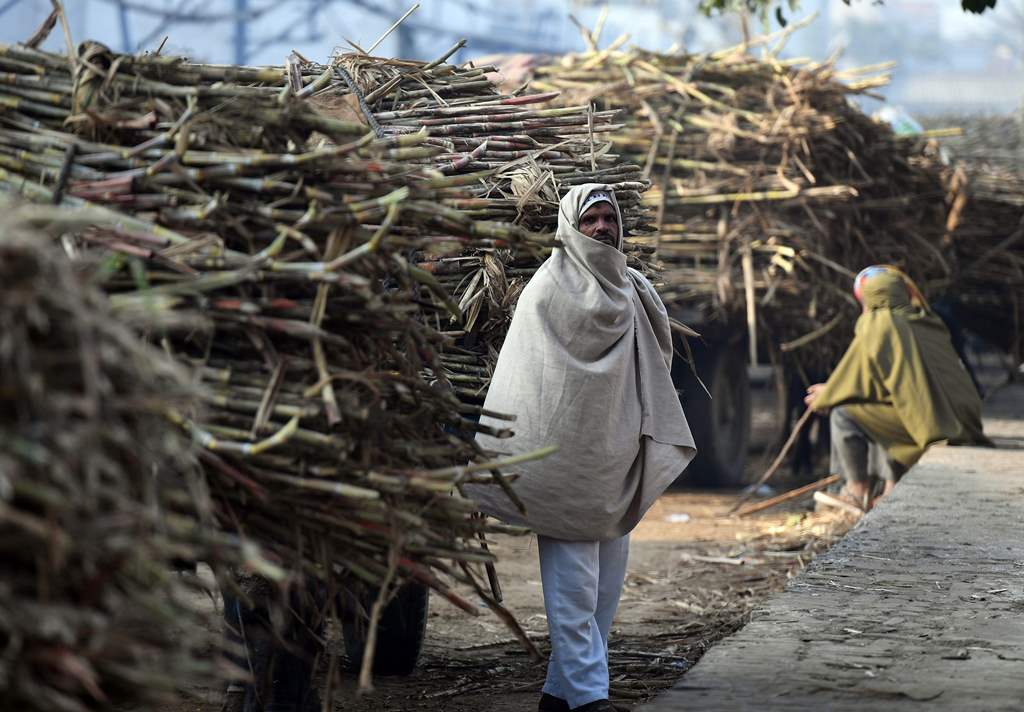
An Indian farmer waits outside a sugar mill to sell sugarcane crop in Modinagar in Ghaziabad, some 45km east of New Delhi, on January 31, 2018. AFP / PRAKASH SINGH
India pledged to focus its budget on farmers and its rural population as Prime Minister Narendra Modi looks to win over voters before national elections next year.
"We have taken up programs to direct the benefits of structural reforms and good growth to reach the farmers, poor and other vulnerable sections of the society and uplift the underdeveloped regions," Finance Minister Arun Jaitley told lawmakers in New Delhi on Thursday. "This year’s budget will consolidate these aims and particularly focus on strengthening agriculture and rural economy."
While Jaitley hasn’t unveiled spending or deficit targets yet, investors have been skeptical of the government’s long-standing vow to improve public finances -- rising yields made the nation Asia’s worst-performing bond market over the past quarter. Higher spending also complicates policy for the central bank, which meets next week to review interest rates amid accelerating inflation.
Modi’s walking a fiscal tightrope, according to Chetan Ahya, chief Asia economist at Morgan Stanley. While the government needs to take steps -- such as probably lowering corporate taxes -- to boost urban jobs, Modi also needs to increase rural transfers to help ease worsening farm distress, Ahya said.
"In the background there have been a few election results that have not been exactly in favor of the ruling party. People may have been getting impatient in the terms of progress at their level," Ahya told Bloomberg TV. "So there is pressure on the government to do something, so that some of the progress is shared."
Modi’s party faces as many as eight state elections this year after economic woes contributed to its worst showing in more than two decades in a vote in his home state in 2017. Then there’s the national poll early in 2019.
The government’s top economic adviser Arvind Subramanian warned this week that setting overly ambitious goals in a year before elections could undermine the credibility of fiscal policy. He predicts GDP growth will pick up to 7 percent or 7.5 percent next year, winning back India the tag of the world’s fastest-growing major economy.
Faster growth could ease pressure on the Reserve Bank of India to lower borrowing costs. It will keep the benchmark repurchase rate at 6 percent on Feb. 7, according to most economists in a Bloomberg survey conducted before the budget announcement.