Doha: Oil prices fell on Friday, wiping out gains from the previous session, on worries that the US Federal Reserve will accelerate plans to boost interest rates to tame inflation. Brent crude futures fell 70 cents, or 0.8%, to settle at $82.17 a barrel. US West Texas Intermediate (WTI) crude fell 1%, to settle at $80.79 a barrel.
Both benchmarks fell for a third consecutive week, hit by a strengthening dollar and speculation that President Joe Biden’s administration might release oil from the US Strategic Petroleum Reserve to cool prices.
On a weekly basis, Brent fell 0.7%, while WTI declined 0.6%. In the meanwhile, Russia’s Rosneft oil company, warned on Friday of a potential “super cycle” in global energy markets, raising the prospect of even higher prices as demand outstrips supply. Still, though there are positive signs on the demand side, with air travel picking up rapidly, tighter monetary and fiscal policy and the looming Northern Hemisphere winter will act as a dampener. Also, Opec+ agreed last week to stick to plans to add 400,000 bpd to the market each month. US oil rigs rose four to 454 last week, their highest since April 2020, energy services firm Baker Hughes Company said on Friday.
Asia liquefied natural gas (LNG) prices rose last week following three weeks of decline as demand increased in China after a sharp drop in temperature, while market players eyed Russian supply into Europe.
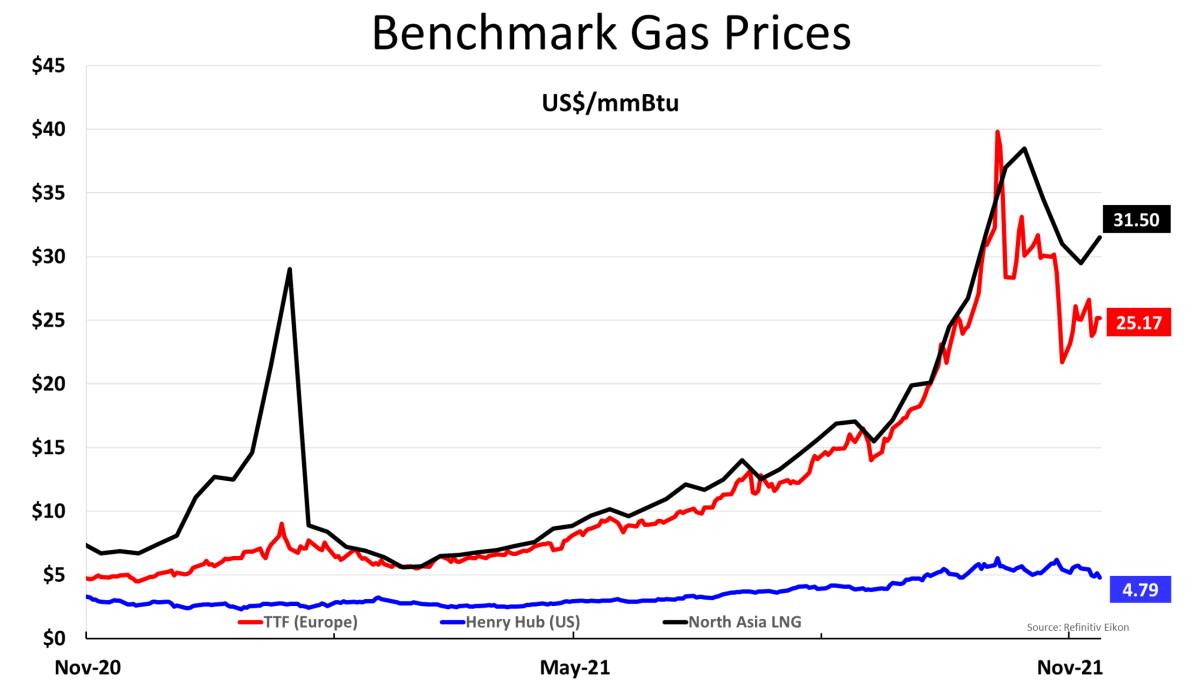
The average LNG price for December delivery into Northeast Asia rose to $31.50 per metric million British thermal units (mmBtu), up $2, or about 6.8% from the previous week, industry sources said. In the meanwhile, market players are eyeing transit capacity auctions on Monday that could indicate Russian supply to Europe for the next months. Low gas flows from Russia and concerns over a political row with Belarus stoked fears of tight supplies this winter and sent gas prices higher on Friday. US natural gas futures dropped 7% to a nine-week low on Friday as output continues to rise and with utilities expected to keep stockpiling gas into mid-November.
That price drop came during a week of extreme volatility despite forecasts for cooler, near-normal weather over the next two weeks that will boost heating demand by more than previously expected. In roller coaster, up and down trade last week, front-month gas futures fell 7%, to settle at $4.79 per mmBtu on Friday, their lowest close since September 7.